
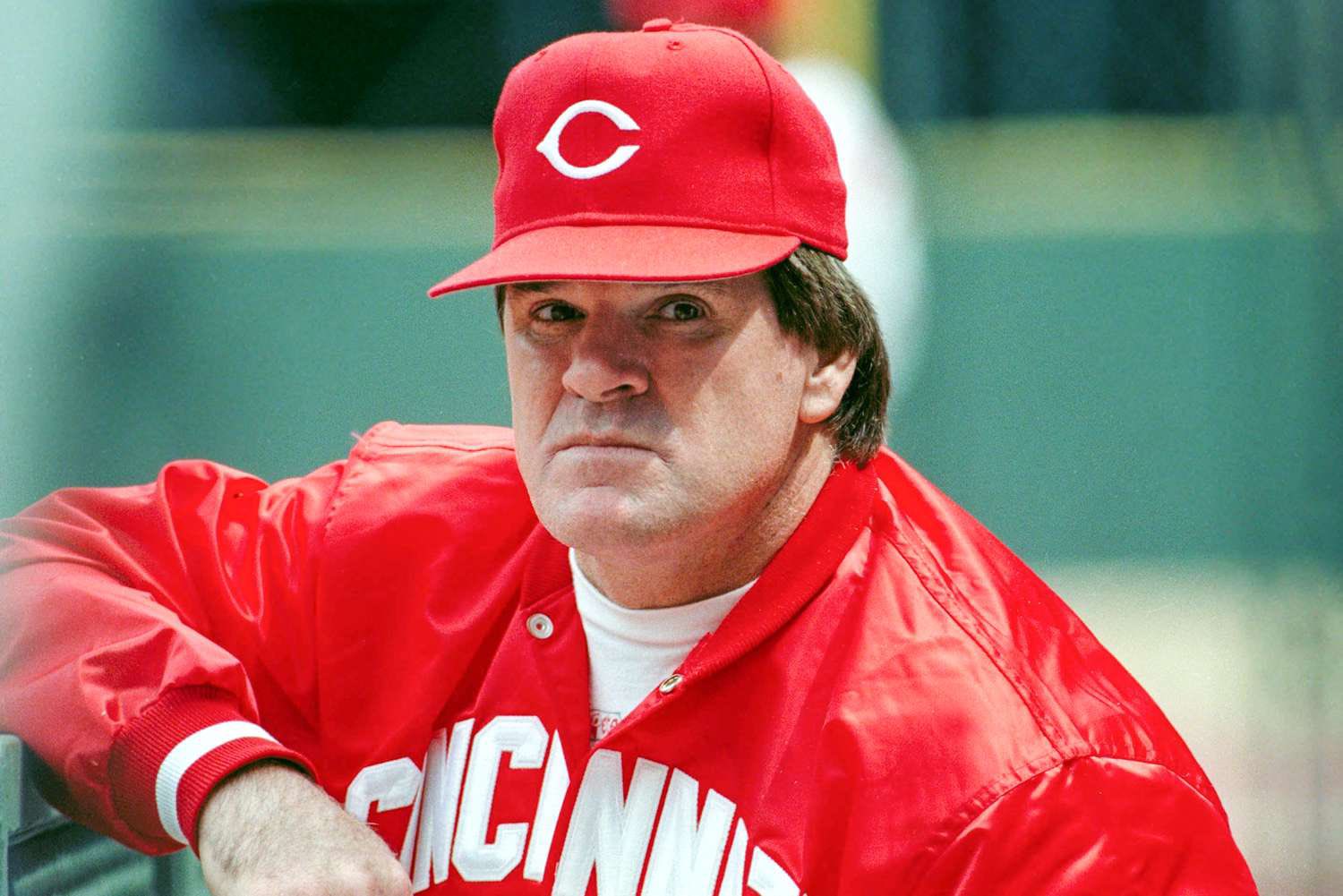
Today, Major League Baseball (MLB) announced that Pete Rose and other deceased players have been removed from MLB’s permanently ineligible list. The announcement was made in a letter commissioner Rob Manfred sent to the Rose family attorney Jeffrey Lenkov. This paves the way for Rose’s induction into the sport’s Hall of Fame (HOF). Since this ruling pertains to all deceased players, it also opens up the door for other players shunned from the HOF, such as Shoeless Joe Jackson of “Black Sox Fame.”
I know the Rose family, and many baseball fans everywhere are in jubilation after hearing this announcement. There are many fans who have been clamoring for his induction ever since the ban on Rose’s admission was established by the commissioner, A. Bartlett Giamatti, in 1989. I am not one of them. I will delve into my opposition to this ruling and a brief history on Roses’s HOF ban. This is not a red-letter day for the sport of baseball or sports in general.
History of Rose’s HOF Ban
Pete Rose had an illustrious 24-year Major League Baseball career playing for the Cincinnati Reds, Philadelphia Phillies, and Montreal Expos. “Charlie Hustle” was beloved by many fans for his aggressive, hard-nosed style of play. He also had his detractors, but no one could deny his overwhelming eligibility to baseball’s Hall of Fame on the basis of his statistics and accomplishments. Rose is the all-time hits leader in MLB history with 4,256. He was named to 17 All-Star Games, won three batting titles, and was awarded the National League MVP trophy after the 1973 MLB campaign.
Rose’s career ended in 1986 as a player-manager of the Reds, but he continued to manage the team until 1989, when he was suspended because of allegations that he had bet on games while he was the Cincinnati manager. After a thorough inquiry by investigator John Dowd, for the commissioner’s office, Giamatti announced that Rose had violated MLB Rule 21 (d) (2). This rule states.
Any player, umpire, or Club or League official or employee, who shall bet any sum whatsoever upon any baseball game in connection with which the bettor has a duty to perform, shall be declared permanently ineligible.”
Giamatti sadly passed away from a heart attack eight days after the announcement. Another rule was passed in 1991 that barred players on the ineligible list from election to the HOF. Giamatti’s successors, Fay Vincent, Bud Selig, and Manfred, maintained the ban despite petitions from Rose in 2015 and 2020 to remove it. Pete Rose passed away from a heart attack last September at age 83.
Support for Pete and Ban Lifted
Rose and his supporters never surrendered their quest to have the ban removed. And in 2020, he gained a powerful and influential supporter. President Trump, at that time, tweeted, “Major League Baseball should have allowed him into the Hall of Fame many years ago. Do it now, before his funeral!” Trump mentioned the ban this past year on his social media site Truth Social, saying that “MLB didn’t have the courage or decency to allow Rose in.” Then, in mid-April, Manfred met with Trump at the White House, greasing the wheels for the subsequent lifting of the ban.
According to a statement from Major League Baseball, Manfred included this in his letter to Lenkov.
“In my view, once an individual has passed away, the purposes of Rule 21 have been served. Obviously, a person no longer with us cannot represent a threat to the integrity of the game. Moreover, it is hard to conceive of a penalty that has more deterrent effect than one that lasts a lifetime with no reprieve. Therefore, I have concluded that permanent ineligibility ends upon the passing of the disciplined individual, and Mr. Rose will be removed from the permanently ineligible list.”
Lifting of Ban is Cruel, Misplaced
So, the situation that Major League Baseball finds itself in after the lifting of the ban is one that is painstakedly full of anguish and unfulfillment. If a player finds himself in a situation similar to Rose’s, he knows he will probably enter the HOF, but not until after his death. That will subject him and his family to years of disappointment, all the while knowing that the player will never get to recite his acceptance speech. Even Rose predicted that he would be inducted into the hall posthumously.
And by MLB saying that the player becomes eligible at the time of their passing because they are no longer a threat to reoffend, does that lessen the severity and ignorance of the infraction? This is throwing a bone to the family while baseball absolves itself of having to comment or act on this desecration of the game. There is no winner in this one.
