
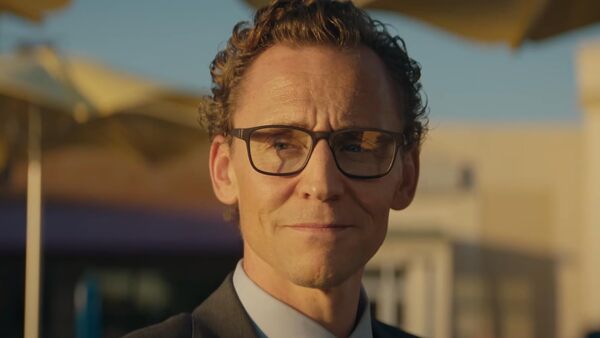
The Life of Chuck is a short story written by Stephen King. At the time it was written in 2020, that meant it would likely become a television or film adaptation someday. It didn’t take that long, all things considered. The film adaptation from noted horror director Mike Flanagan arrived in 2024 at film festivals and wide released in June 2025.
King, known as the master storyteller, has had countless works adapted by different people. He’s even had one adapted by Flanagan before, 2019’s Doctor Sleep, a sequel to The Shining. These two seem made for one another, with King’s most notable works being horror, and Flanagan’s much the same. This is anything but.
The Life of Chuck: A Beautiful Existential Crisis
Mike Flanagan’s most notable works have been for Netflix and under the horror genre. He’s done more than a few television series, notably The Haunting of Hill House and The Fall of the House of Usher, and some movies. Stephen King’s most notable works are also pretty scary, but there’s nothing frightening here, unless you find self-examination and existentialism scary.
The film is broken down, exactly like the book, into three acts. But they’re reversed, again just like the book. The story opens with the end of the world. The Internet has gone away, phone lines are not far behind, and California is falling into the ocean. It’s as bad as it can be, and there’s not much time left. Perhaps apropos of today, there are a lot of questions asked by characters about how much time that actually is.
Matthew Lillard’s character, Gus, nearly breaks down recounting everything that’s gone wrong at once, calling it “60 levels of s**t.” That certainly seems applicable to 2025 in the very real world, and there’s a very fitting connection to the epicenter of what’s going wrong being in California. It is metaphorically going under right now, but it’s literal in The Life of Chuck.
That’s just the beginning, though. Or the end, technically. The film then progresses backwards in time, just like in the book. The main issue with the story King penned and published five years ago is the difficulty in telling a story in reverse. Even a master storyteller like King has to account for that difficulty, and that’s a big issue in his work.
He starts out with the most interesting part of the story, the end of the world. Moving backwards only makes it less interesting and a little more confusing. The story is never better than it is right at the beginning, unfortunately. That same criticism can be levied at the movie, but Flanagan, who wrote the story for the screen, does a wonderful job making each third of the movie as interesting as the others, for the most part.
Three Reversed Acts
The apocalypse will linger longer in the memory than perhaps the final (opening) act, but none of the three really pale in comparison to one another. The screenplay devotes as much time to each one, and the actors working in them do a terrific job of engaging the audience.
Each one could be its own story, too. Chuck Krantz is the through line, but there’s a ton of connections keeping them together. That said, you could break each one off and still come out with a really beautiful tale. In one, the end of the world gets people to reconnect and come to grips with how disconnected they really are. “That sucks” is all anyone can say about the end of everything, another appropriate mirror for today.
In another, we get to see a character, Chuck Krantz, do something that he can’t explain why. It is a pivotal moment in his life, one that the universe seemed to serve to him on a silver platter without explanation. Chuck can’t begin to explain why he decided to dance in the street to a busker’s music that day, but he speculates that moments like those are why the universe was made in the first place.
In the final one, things get really existential. Child Chuck has lost his parents and his would-be younger sister. The ruminations on life get heavier here despite a younger protagonist less capable of handling them. There’s some poignant commentary on doing what you love versus what the world needs or what one believes might serve them best in life.
There’s a moment right at the end of the movie in which Chuck decides to forget that he knows when and how he’s going to die and instead live his life to the fullest until that moment comes upon him. Based on what we know happens outside the story, we can say Chuck, like most of us, struggled with that goal. But there were still moments, those that lived in his mind until the very end, where he did just that.
Thanks for 39 Great Years, Chuck Krantz
Life for Chuck was fairly plain, and it only lasted a great 39 years. That’s pretty unfair in the grand scheme of things. 39 years is almost half the life expectancy of the average human. He was an accountant instead of a dancer, something most non-accountants would absolutely dread. And he suffered an illness that took his life far too early. It’s all a tragedy.
But the way the story is told, with the unfolding reverse narrative that truly only works in reverse and the exceptional imagery, acting, and editing, makes it look like Chuck Krantz’s life was truly beautiful. Maybe that’s how it is for all of us whether we realize it or not. Ultimately, The Life of Chuck’s narrative and the backwards storytelling may not work for everyone. But the final goal of a movie is often to make us feel something. That, I believe, will work for everyone.
