
Some sports records will never be broken. Rickey Henderson’s career stolen bases, Wayne Gretzky’s career points, Jerry Rice’s career receiving yards, and Nolan Ryan’s career strikeouts will undoubtedly last forever. Another seemingly unbreakable feat would become history, thirty years ago, today.
In the spring of 1982, a spry, young third baseman for the Baltimore Orioles, Cal Ripken Jr., unknowingly began his journey into the record books. He was in his second season in the Majors and just starting to gain traction in his career. He would eventually make the shift from the “hot corner” to shortstop later in the season, a move that would pay off in the long run.
Ripken, a two-time American League Most Valuable Player, had a knack for swinging the bat; he displayed power that was unusual for a middle infielder, hitting 431 career home runs and winning eight Silver Sluggers. Despite his 6’4″ frame, he was a reliable and nimble fielder, leading the league in several statistical categories and winning a pair of Gold Glove Awards.
Fans took an immediate liking to Cal’s enthusiasm and love of the game. Ripken took the field day after day, playing the game that he loved. He went over five years without missing even one inning. Not just a fan favorite, he was revered by his peers and was selected to 19 All-Star teams. His blue-collar approach to the game was instilled in him by his father, Cal Ripken Sr.
“Come to the ballpark ready to play. If the manager writes your name in the lineup, then you play. It’s that simple.”
Ripken became a role model to not only kids, but adults as well, still clinging to their childhoods, living vicariously through him. Most of us have hum-drum jobs that we waste away in day after day. So we long for a job that we love so much that it doesn’t seem like work. He became our working-class hero.
Chasing Gehrig
Ripken showed up, as he always did, and before too long, people started to talk. By the early 1990s, it became a topic of casual conversation: could somebody actually break a long-standing, seemingly untouchable record. One that Hall of Fame first baseman, Lou Gehrig, set fifty years earlier?
Gehrig had placed the feather in his Hall of Fame cap by playing 2,130 straight games. An unheard-of streak of durability, longevity, and dedication. The reality of the possibility became almost a daily reminder every time Ripken stepped onto the diamond. As Ripken closed the gap on Gehrig, baseball took on a new life.
Baseball Revival
Following Major League Baseball‘s (MLB) labor strike in 1994, baseball needed to regain its depleted fan base. Ripken’s chase was too riveting to keep people away. Even once-casual baseball fans found themselves checking the box scores every day to see if he played. This positive story was just what MLB needed, an inspirational quest, not driven by ego or selfishness, but by hard work and Ripken’s unbreakable character. He took the field, day after day, with a one-game-at-a-time attitude, which resonated with his teammates and fans alike.
Record Breaker
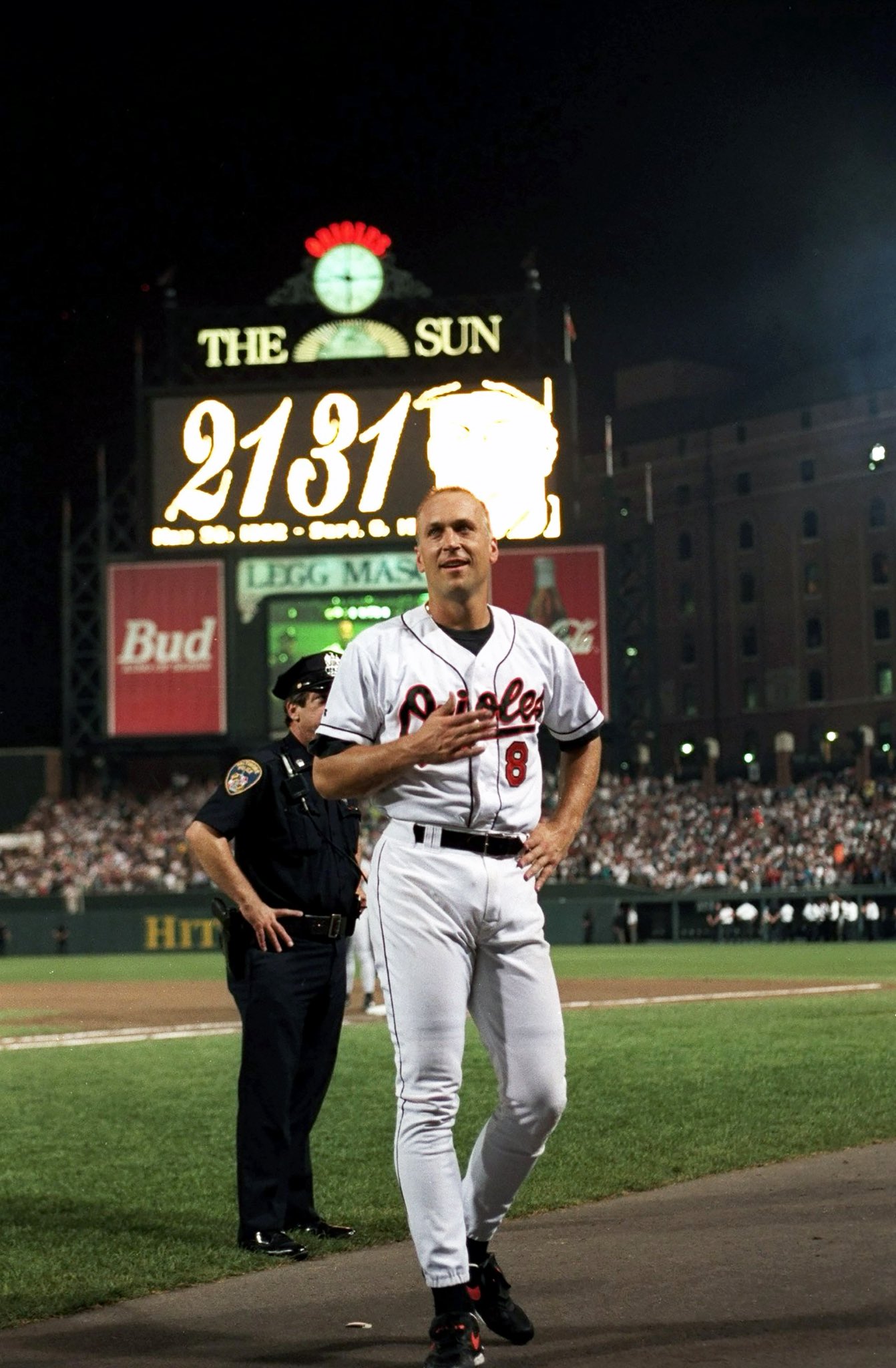
On September 6, 1995, after chasing Gehrig for 17 years, Ripken finally passed him. He stepped onto the field for his 2,131st consecutive game. A once untouchable streak was now merely a blur. He would go on to extend that number to 2,632 straight games before deciding it was time to put the streak to bed on September 20, 1998. His passing Gehrig is regarded by many as one of the most memorable moments in baseball history.
To some, the name Ironman belongs to Tony Stark, but real sports fans know that the title belongs to the untouchable Cal Ripken Jr. In today’s game, load management keeps players off the field, so in the eyes of baseball purists, Cal’s record is truly unbreakable. As it stands, 31-year-old Atlanta Braves first baseman Matt Olson holds the active streak for current MLB players at 761 games… a total spanning four years. It is safe to say, Ripken’s record is here to stay.
