HBO Max released a docuseries last month called “The Yogurt Shop Murders.” Following its release, police named an official suspect in the 1991 quadruple murders of four teenage girls in Austin, Texas. Robert Eugene Brashers died in 1999 but has been identified as the suspect from decades ago using new DNA analysis.
After authorities identified the suspect last week and announced it on Friday, September 25, 2025, they provided a timeline of the murders and how they linked Brashers to them. They also believe him to have been a potential serial killer, citing his DNA matches with a few cases around the country.
1991 Yogurt Shop Murders
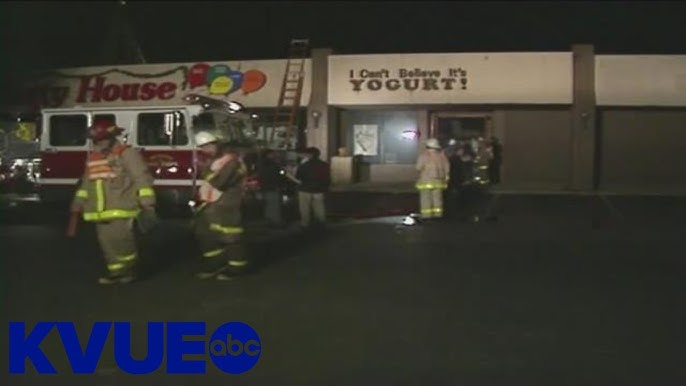
On December 6, 1991, four teenage girls as young as 13 were found bound, gagged, and shot in the head at the burned-down ‘I Can’t Believe It’s Yogurt’ shop. Amy Ayers, 13; Eliza Thomas, 17; and sisters Jennifer and Sarah Harbison, ages 17 and 15, were found nude and tied up with their own clothing. According to the Austin police, they believe the perpetrator entered the yogurt shop and stayed until it closed. Two of the girls were employees, so they were responsible for closing up. No other customers were supposedly there at the time of closing.
Austin police cold case detective Daniel Jackson spoke at a news conference on Monday, confirming details. “There was evidence of sexual assault,” he said. “All four have been shot in the head with a .22 caliber pistol, and Amy was also shot with a .380 pistol, and then the building was set on fire before the suspect left the scene.”

Photo Courtesy of CBS Mornings via Instagram
DNA Technology
While DNA technology was around at the time of the yogurt shop murders, it was not as advanced as it is now. Detectives still collected swabs that were tested years after the fact. However, the case contained thousands of leads, multiple false confessions, and damaged evidence from a burned-down crime scene, causing it to run cold.
“Some of the only physical evidence that was recovered was one spent .380 shell casing that was located in the floor drain,” Jackson said. “There were no .22 caliber casings recovered, and the fire — and the water from the fire department — basically destroyed pretty much anything else that you were going to try to collect or try to process at this crime scene.”
Initial Investigation and False Confessions
Days following the yogurt shop murders, police detained Maurice Pierce, a teenager who possessed the same pistol of the same caliber used to shoot the girls execution-style. His arrest led detectives to question three other teenage boys: Michael Scott, Robert Springsteen, and Forrest Welborn.
Over the next eight years, Scott and Springsteen became prime suspects after confessing to the crime and implicating one another. They did recant their confession, claiming police had coerced their statements, but they went to trial and were convicted in 2001 and 2002. Although there was no physical evidence linking the two to the yogurt shop, one was given life without parole, and the other was given the death penalty.
A landmark Supreme Court Case helped to overturn their convictions in 2007 and granted them new trials. An appeals court ruled that their Sixth Amendment right to confront accusers was violated under Crawford v. Washington, which barred the use of a person’s statement against them.
In preparation for the boys’ new trial, the district attorney’s office re-examined the sexual assault kits that were taken. They were able to rule out all four original suspects, citing the presence of an unknown male DNA profile that did not match theirs. In 2009, all charges were dropped, and the case went cold.
Connecting Through Cold Cases
For years following the boys’ exoneration for the yogurt shop murders, investigators took the unknown male DNA profile and tested it with hundreds of people but had no luck. Detective Daniel Jackson took over the case in 2022 and recently submitted the .380 casing found in the floor drain at the yogurt shop to the National Integrated Ballistic Information Network system. They were able to connect it to another cold case in Kentucky, and he worked with investigators there to connect the cases.
Jackson also contacted labs across the country with Y chromosome testing and was able to find a match from a 1990 sexual assault and murder in Greenville, South Carolina. Officials were able to find similarities between the two cases, such as girls being bound by their clothing, which led to further connections with other cases, such as a 1998 shooting of a mother and daughter and a 1997 rape of a 14-year-old girl.
Yogurt Shop Suspect Deemed Serial Killer
In 1985, Brashers was arrested in Florida for shooting a woman who rejected his sexual advances and was sentenced to 12 years in prison. However, he was out on parole by May 1989. He died following an hours-long standoff with Missouri police officers when he shot himself in the head in 1999. His death brought clarity to a lot of victims and their families.
“After he died, basically, DNA linked multiple unsolved murders and sexual assaults across the country to him,” Jackson said. “Between 2006 and 2017, they knew that they had a serial killer in these different jurisdictions, but they didn’t know who he was.”
Brasher’s body was exhumed in 2018 after genealogy testing of his relatives and considering his violent history. Biological evidence linked him to multiple sexual assaults and murders, including three of the girls from the yogurt shop. Officials recently retested Amy Ayers’ fingernail clippings for DNA, “and it matched, so that it’s 2½ million to one that it’s likely Robert Brashers underneath Amy’s fingernails,” Jackson said.
The Investigation Continues
Officials say the investigation into the yogurt shop murders continues, but with more resources and new information, they believe they will have it closed soon. “I’m sorry that it took 34 years for us to get here, but we’re here now,” Jackson said. “And, you know, Amy’s final moments on this Earth were to solve this case for us. It’s because of her fighting back.”
Relatives of the yogurt shop victims spoke at the Monday news conference, thanking the officials for their work and providing further clarity. Jennifer and Sarah Harbison’s mother said, “It has been so long, and all we ever wanted for this case was the truth.”
Eliza Thomas’ sister also acknowledged the progress in the case but explained, “Our reality doesn’t change after today. Our families are still too small, still missing an essential ingredient, and we are lesser for it.” She added, “We have been robbed of a life with nieces and nephews and grandchildren and with sisters to grow old with. This sort of mindless violence continues to steal from all of us.”
