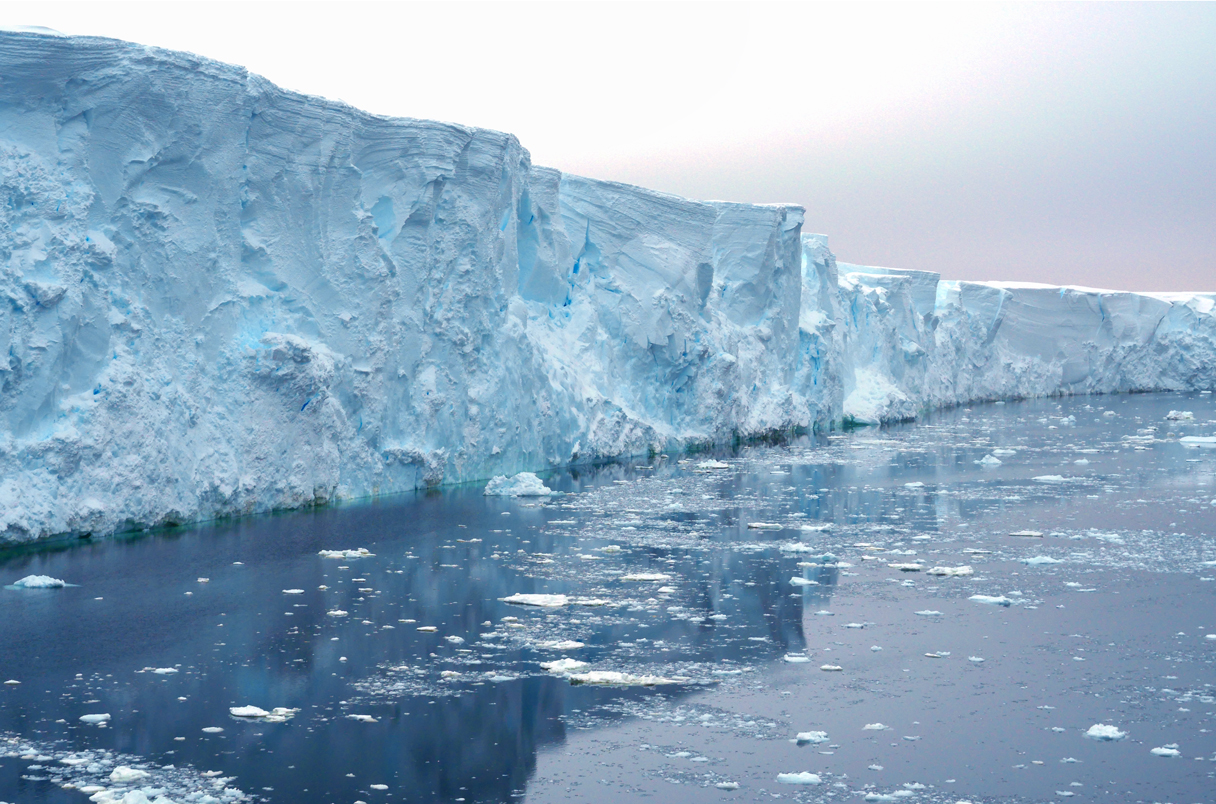
While the world sleeps, a catastrophe is brewing in Antarctica. The gigantic Thwaites Glacier is collapsing at an alarming rate as scientists attempt to slow this impending disaster. The glacier is part of the expansive West Antarctic Ice Sheet, and it is among the world’s most unstable glaciers. Thwaites derives its nickname due to its potential to raise sea levels. It’s considered one of the leading indicators of the pace of climate change.
Now, a team of scientists are rushing there to study a recently discovered problem that could have grave consequences for the world. For not only is Thwaites melting rapidly, but deep cracks on its underside are weakening its structure, leading to accelerated deterioration. The scientists are heading to the glacier to hopefully discover when this could happen and if it is avoidable.
Thwaites Glacier is Cracking
Scientists sent a torpedo-shaped robot beneath the Thwaites Glacier. From this, they discovered cracks and stair-like fractures in the ice that are increasing its rate of erosion. Their results were published in the science journal Nature last Wednesday. These fractures cause a cycle that increases the acceleration of the ice flow, which damages the shelf that seals the glacier to its location.
This information is helpful in two ways. It not only indicates that the glacier is less stable and melting faster than previously thought, but also suggests that other glaciers in the region may be responding negatively to sea-level change, thereby accelerating global sea-level rise. A ship carrying nearly 40 researchers from around the world departed New Zealand on Saturday and will spend a month at the edge of the Antarctic ice to further study the situation.
Repercussions of the Glacial Collapse
Thwaites is roughly the size of the state of Florida and is more than a mile thick in some spots. It’s reported to be shedding 50 billion tons of ice per year. If it melted entirely, it would raise average sea levels by 2 feet. However, Thwaites holds back the vast West Antarctic ice sheet. The most catastrophic outcome would be its collapse, which could cause the entire ice sheet to melt. This would add another 10 to 15 feet to the sea-level rise.
Over the past two decades, images show that the “total area length of fractures has grown from around 100 miles to over 200 miles, but the average length actually decreased. The supposition is that significant new stresses are further damaging the glacier. Currently, the Thwaites Glacier accounts for approximately 4% of global sea-level rise.
Areas of the US that would see significant shoreline destruction include New York, Virginia, South Carolina, Georgia, and Texas. Cities that the rapidly rising waves could engulf include New York City, Savannah, Charleston, and Virginia Beach. Much of southern Florida could be submerged, including Miami and Everglades National Park. On the Pacific Oceanfront, California cities like Los Angeles, Huntington Beach, Sunset Beach, and the San Francisco Bay Area face a significant risk of being wiped out.
When, and is it Avoidable
Cutting carbon emissions that drive climate change is a way to protect the glacier from collapsing. Unfortunately, the nations of the world are woefully behind on reaching their climate goals. World fossil fuel emissions hit a new record in 2025 and show no signs of decline. Many scientists believe it may be too late to prevent the ice in this part of the Antarctic coast from melting to some degree.
The Arête Glacier Initiative, a new coalition of researchers, technologists, and others, is on a mission to improve forecasts of the glacier’s retreat and discover ways to slow its collapse or even stop it. But the message is clear. Rising sea levels are not a centuries-later concern. Sometime in the next few decades, without proper mitigation, Thwaites will collapse, endangering millions of people along the world’s coastlines. Most scientists agree that it’s no longer a question of whether it will happen, but when.
I would like to thank my very good friend Dan Stock, whose research made this article possible.
