
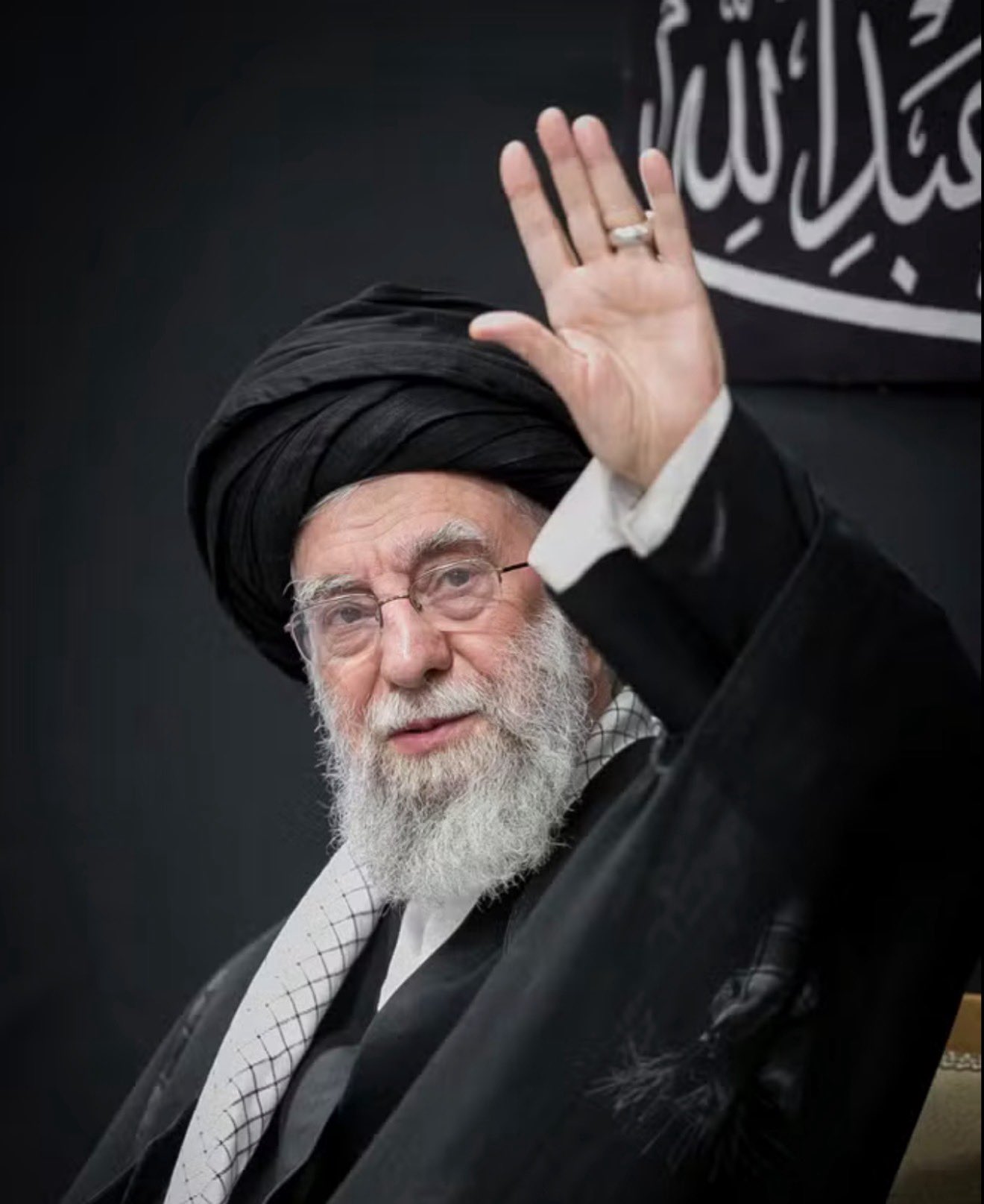
Iranian Supreme Leader Ayatollah Ali Khamenei was killed today in massive U.S/ Israeli military strikes, according to multiple Israeli and U.S. intelligence officials. Initially, after the strikes, Israeli Prime Minister Benjamin Netanyahu commented that there are “growing signs” that Khamenei is gone.” There are throngs of people cheering in the streets of Tehran. The White House has confirmed his death.
The United States and Israel launched multiple strikes on Iran early today, targeting senior leaders and military installations after US President Donald Trump called for regime change in Iran. Iran immediately responded with a score of counterattacks, targeting Israel and US military installations in countries including Saudi Arabia, Bahrain, Qatar, and Kuwait
Khamenei’s Reign
Khamenei had been Iran’s supreme leader since 1989, when he succeeded Ayatollah Ruhollah Khomeini at the time of his death. Khamenei controlled all branches of the government and the military and was considered the country’s spiritual leader. As Iran’s supreme leader, he held total control over the country’s political, military, and religious bodies, presiding over all domestic and foreign policy.
Khamenei was a master manipulator of a tangled system of clerical rule, and that, combined with his crackdown on democracy, ensured that no one could challenge his decisions. Over almost four decades, Khamenei built Tehran into a power that rivaled the Sunni Muslim states across the Gulf while promoting nuclear weapons capability, much to the consternation of the U.S., Israel, and their allies in the Arab World.
This year, he ordered the biggest crackdown on protesters since the 1979 Islamic Revolution. The national protests initially started as a pushback against soaring prices in the country. Regarding the protestors, Khamenei said, “They should be put in their place” before security forces opened fire on demonstrators chanting “Death to the dictator!” At least 7, 000 people have been killed in the government crackdown, with the actual number probably being much higher.
What’s Next?
The big question now is, how long will the U.S. and Israel continue their attacks now that Iran’s supreme leader is gone? After the bombings started but before word of Khamenei’s death, world leaders such as British Prime Minister Keir Starmer, French President Emmanuel Macron, and German Chancellor Friedrich Merz called on the U.S. and Iran to resume talks and work toward a mutually agreed-upon settlement. Also, how long will the main path for oil leaving the Gulf, the Strait of Hormuz, remain closed by the Iranian government?
As for the future leadership of Iran, possible successors include Reza Pahlavi, the son of Iran’s last shah; Maryam Rajavi, leader of the National Council of Resistance of Iran (NCRI); Mohsen Qomi, a longtime trusted adviser to Khamenei; and Alireza Arafi, a member of the Guardian Council and the Assembly of Experts.
Others in the mix include Mohsen Araki, a senior cleric with deep ties to religious institutions; Gholam Hossein Mohseni Ejei, the head of the judiciary; and Hashem Hosseini Bushehri, the Friday prayer leader of Qom and a member of the Assembly of Experts.
