
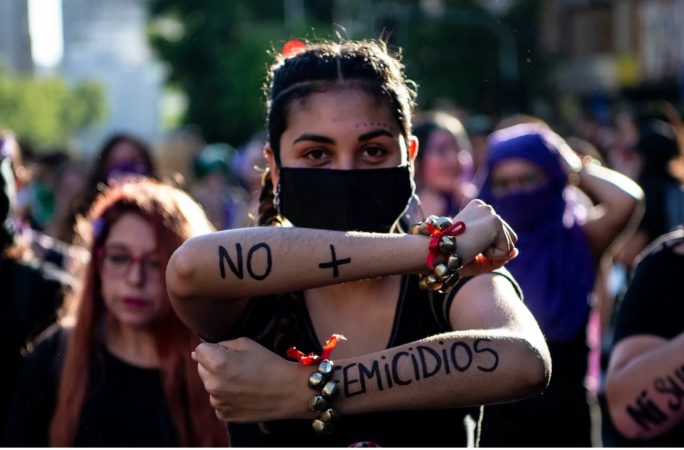
Every other day, I read a news report about a woman or girl being killed or assaulted simply for existing. Unfortunately, the numbers are increasing worldwide. According to the UN, a woman is killed every ten minutes. Femicide is often underreported, especially when we begin to examine the high rates of these killings targeting Black and Brown victims.
Femicide is driven by discrimination against women and girls, unequal power relations, gender stereotypes, or harmful social norms. By not giving this issue the attention it so desperately needs, other horrors are created, and the women and girls of this world are the ones who suffer the consequences.
Femicide vs. Homicide
The creation of the Violence Against Women Act in 1994 in the United States was a positive step forward and made society view violence against women through a different lens. It made it so that domestic violence could no longer be dismissed as a private matter. However, most victims of femicide are killed by intimate partners (whether romantic, platonic, or familial). Over 55% of all female homicide victims in the U.S. are killed by current or former intimate partners.
The problem with the term “homicide” is that it’s too broad. The literal definition is a manner of death, when one person causes the death of another, either through an action or inaction. Femicide is the deliberate, intentional killing of women or girls because of their gender. Often stemming from misogyny. It’s important to know the difference because these killings against women and girls are simply not gender-neutral. Femicide specifically highlights gender-based life taking.
The loose use of the word homicide also doesn’t delve into the high rates of who is responsible for the killings, which matters. The chart below shows that women are more likely to be murdered by an intimate partner or nonintimate family member in comparison to men.

What Lack Of Attention To Femicide Creates
Although saying that lack of attention to femicide creates a hostile environment that aids in women and girls being killed or assaulted is very true, we must also pay attention to what happens socially when not-so-quiet genocides like this are brushed off at the global scale. By not prioritizing femicide as a global issue, we further push the misogynistic ideology that women have no value.
This is the idea that women and girls are meant to be conquered, controlled, and owned. Perpetrators feel comfortable in their wrongdoings because of the lack of attention to the matter. Also, the technology we have access to in these modern times has created new ways for violence against women to be committed.
Technology-facilitated violence, such as cyberstalking, coercive control, and image-based abuse, can escalate offline and, in some cases, lead to femicide. Like online, group chat, rape academies where men encourage one another to drug and assault their wives, and swap tips on getting away with it.
One adult content site, Motherless.com, hosts more than 20,000 videos of so-called “sleep” content uploaded by users, with hundreds of thousands of views. The website had around 62 million visits in February alone. In these videos, men film themselves lifting the closed eyelids of women to show they are sleeping or sedated, with some “eyecheck” videos surpassing 50,000 views.
Moving Forward
Globally, 85,000 women and girls were killed intentionally in 2023. While gender- based violence affects women across all backgrounds, the risk is disproportionately higher for women of color, LGBTQ+ individuals, indigenous women, and immigrants, whose cases are often overlooked, underreported, or misclassified. According to the Violence Policy Center, Black women are murdered at nearly three times the rate of white women in the U.S. This racial disparity is worsened by systemic neglect.
According to the UN, in order to prevent femicide, we must strengthen legal frameworks, support survivor-centered services, and improve the gathering of data. I must also mention that unless we acknowledge how patriarchy and racism contribute to femicide, this work, suggested by the UN, will be in vain.
