
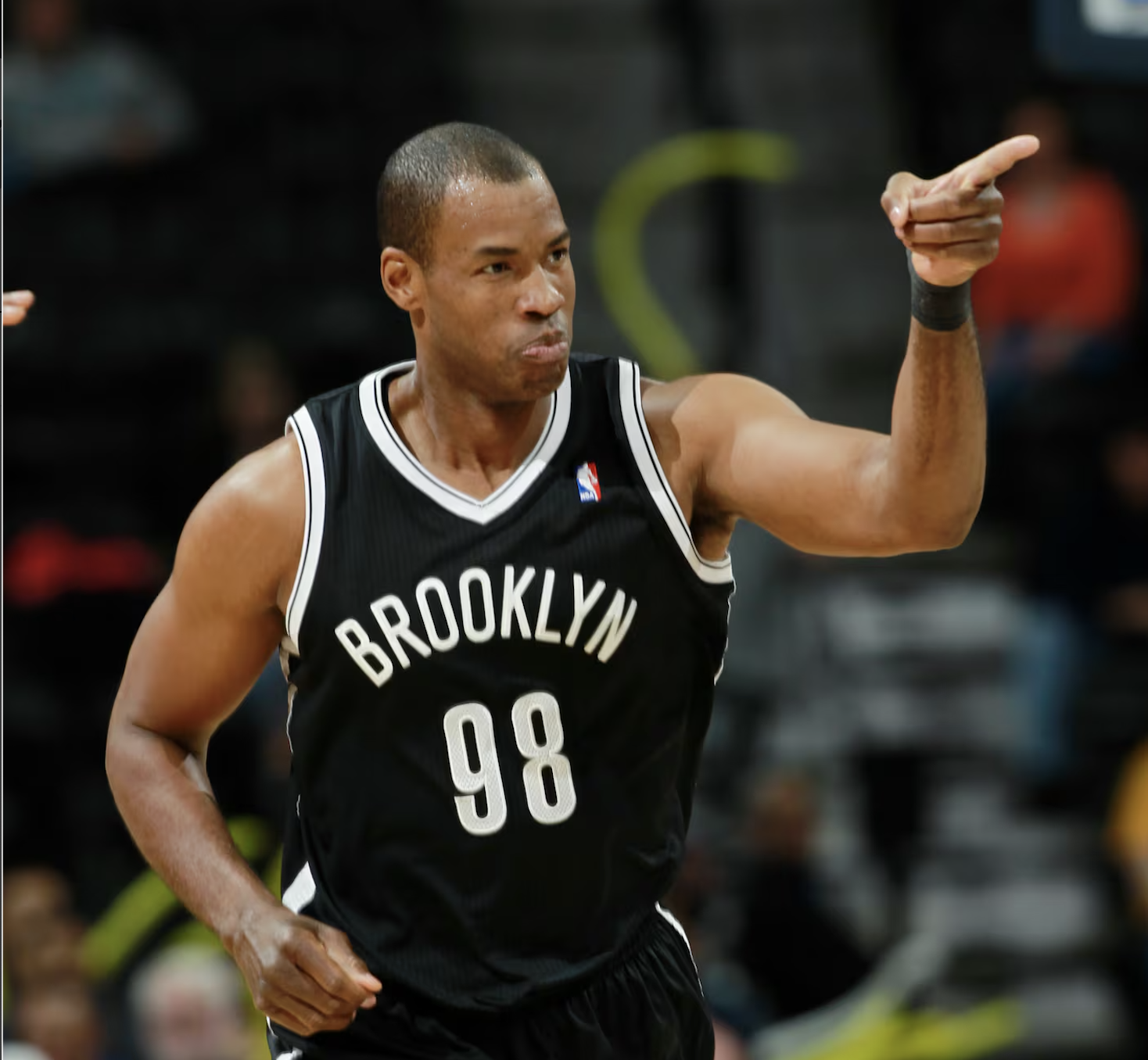
When it comes to bravery, very few people have faced the battles that former NBA player Jason Collins has. In a time when acceptance wasn’t always accepted and being true to yourself was often looked at through the eyes of the judgmental, Collins was a pioneer. He blazed a trail for anyone living in the shadows of their own identity. Collins passed away on May 12, 2026, at just 47 years of age.
Collins was born on December 2, 1978, in California. Alongside his twin brother Jarron, he attended Stanford University, where the duo led the Cardinal to deep NCAA Tournament runs, reaching the Final Four as freshmen and the Elite Eight as seniors.
Jason was selected by the Houston Rockets with the 18th pick of the first round of the 2001 NBA Draft. But he was part of a package traded to the New Jersey (now Brooklyn) Nets later that night in exchange for the seventh overall pick, forward Eddie Griffin. Later in the draft, the Utah Jazz selected Jarron.
NBA…
As a rookie, Collins would play an important role for an improving Nets team that lost to the Los Angeles Lakers in the 2002 NBA Finals. In his second season, Collins secured the starting center role and again helped the Nets reach the NBA Finals, where they lost to the San Antonio Spurs. He played well enough to sign a five-year, $25 million contract following his third season.
Collins would be traded twice in 2008; first to the Memphis Grizzlies (for Stromile Swift) and four months later, he would be packaged in an eight-player deal with (third overall pick) O.J. Mayo, to the Minnesota Timberwolves for (fifth overall pick) Kevin Love.
The Atlanta Hawks signed Collins to a free agent deal before the 2009 season. He helped anchor the Hawks’ frontcourt with dependable rebounding and defense off the bench, backing up center Zaza Pachulia. Following the arrival of rookie Al Horford in the 2011-12 season, Collins left Atlanta for a similar role with the Boston Celtics. Once again, Collins was on the move when the Celtics traded him to the Washington Wizards…
Coming Out…
Following the 2013 season, Collins came out publicly, announcing that he was gay. He became the first active male athlete from the four major North American sports leagues to openly come out. His contract with the Wizards had expired, and he announced his intention to continue his playing career. He was not invited to participate in any team training camps, but continued to work hard at his home, awaiting another opportunity.
On February 23, 2014, nearly 10 months after coming out, the Nets (now located in Brooklyn) gave him a call and signed him to a 10-day contract. Former Nets teammate and friend Jason Kidd was now the Nets’ head coach had advocated for the team to sign Collins.
Collins would suit up and play 11 minutes against the Lakers in his return to the Nets, becoming the first publicly gay athlete to play in a game in a North American sports league. He played well enough for the Nets to offer him a second 10-day contract, later signing on for the remainder of the season. On November 19, 2014, after 13 NBA seasons, Collins announced his retirement from basketball.
Out of the Closet and Opening Doors…
He initially wore number 46 for his return, but would switch to number 98, which he previously wore in Boston, in honor of Matthew Shepard, who was murdered in 1998 as a victim of a hate crime for being gay. Collins’ #98 jersey would become the highest-selling jersey for the NBA’s online store. The NBA also auctioned off signed Collins jerseys for charity, donating proceeds from all Collins jersey sales to the Matthew Shepard Foundation and the Gay, Lesbian, and Straight Education Network.
Before coming out, Collins was in a long-term relationship and engaged to his former college girlfriend and WNBA player Carolyn Moos. He called off their wedding in 2009, after an eight-year relationship with Moos, who was not aware that Collins was gay until a few days before he came out publicly.
Collins was inspired to come out when his former college roommate, Massachusetts politician Joe Kennedy, a straight man, marched in the 2012 Boston Gay Pride Parade. Collins realized that his sexual orientation was nothing to be ashamed of and that society had become more tolerant and understanding. Despite some scrutiny for being gay and a Christian, he also received heavy praise and support for his bravery and advocacy from the LGBTQ community.
Over the years, several female athletes have come out, but the stigma had been different for male athletes. In the past, male athletes had kept their sexuality a secret until after their careers were over. Since Collins’ historic decision, several more active male athletes have come out. Among them were the first openly gay football player to be drafted in the NFL, Michael Sam; current NFL player Carl Nassib; and hockey player Luke Prokop, who came out while in the NHL developmental system.
Death and Legacy…
Last September, the NBA made a statement on behalf of Collins and his family, announcing that he was undergoing treatment for a brain tumor. In December, Collins revealed that he had stage 4 glioblastoma, which is a very aggressive form of brain cancer with a very low survival rate. He faced cancer with the same bravery and determination that he had shown throughout his career. On May 12, 2026, Collins passed away in his home. He was 47.
While he had a solid NBA career, statistically, he was far from a Hall of Famer. He only averaged 3.6 points and 3.7 rebounds per game, but his off-court contributions and impact to the LGBTQ community are immeasurable. To those who knew him, he will be remembered as a great teammate and friend. For everyone else, he is remembered as a pioneer and champion for gay rights and inclusion. He changed the landscape of pro sports in America for the better.
After Collins’ passing, NBA legend, Basketball Hall of Famer, basketball analyst Charles Barkley had a great quote, “We live in a homophobic society… anybody who thinks we ain’t got a bunch of gay players in all sports, they’re just stupid.”
