
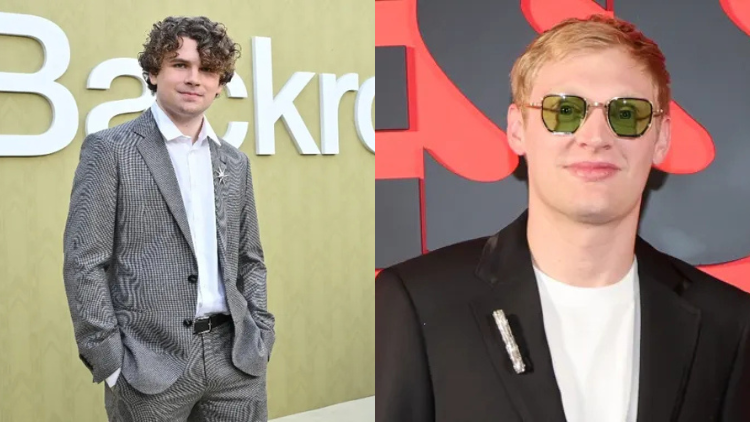
Curry Barker and Kane Parsons are the latest YouTubers/short-form content creators to make the leap to Hollywood feature-length films. The Phillipou brothers did it, Chris Stuckmann did it, Markiplier did it, and Jordan Peele did it best, arguably.
What Barker is doing with Obsession and what Parsons is doing with Backrooms is a little unprecedented, though. In a day and age when the box office is not at all thriving, those two movies from unheralded filmmakers from extremely young generations are dominating in a way that suggests they’ve figured Hollywood out.
Curry Barker and Kane Parsons Might’ve Unlocked the Box Office

By all accounts, both Obsession and Backrooms are massive successes. Curry Barker’s Obsession is tracking to be one of the most profitable films ever made. It’s already grossed over $150 million worldwide, which is roughly 150x the budget. Backrooms just made $81 million domestically in its opening weekend, which makes it the biggest opening weekend for A24 by a wide margin. Previously, Civil War held the record at $25.5 million.
Compare that to what ordinarily would’ve been the biggest movie of May, The Mandalorian and Grogu. That’s an established and beloved IP, a huge budget, a dominating hold on the biggest screens, and widespread availability. Yet, that movie, which has been out a week less than Obsession, is getting lapped at the box office.
It suffered a monstrous 70% drop in its second weekend. That means it’s certainly destined to be a flop, and it means only the most diehard fans of Star Wars are even considering seeing it. It’s showing on a lot more screens, but two indie horror films from YouTubers are placing first and second at the box office.
What Curry Barker and Kane Parsons have done is tap into a generation of moviegoers who have long been blamed for the struggling box office. In all fairness, movies tend to be more popular among the younger generations, and young people don’t have the money to spend on movie tickets like they used to.
It might’ve been an unfair criticism from movie studios and executives, but it was not totally unfounded. And yet, as it turns out, those younger generations can go to the movies and spend money on tickets when the movies are good or give them a voice.
Both Obsession and Backrooms speak to things that are very relatable to Gen Z and younger millennials. One could go on and on about all the thematic layers of Obsession, but one that Barker managed to include was this generation’s fear of being cringe and its obsession (pun intended) with being nonchalant.
In the movie, Bear wants Nikki to love him more than anything, but when she does, he’s uncomfortable with the level of adoration. He doesn’t want to be seen as cringe, so he doesn’t reciprocate. He also begs her to “act normal.” The party scene is particularly telling. Nikki is doing some really weird stuff, while Bear looks like he could not possibly be bothered with any of it. It’s nonchalant, which has become a defining feature of this internet-fueled generation.
It’s cool to care about things. It’s cool to be passionate, and it’s cool to feel things deeply. It is perhaps not cool to pretend like nothing matters and you don’t care about anything, which is one of the many messages hidden in Obsession and something that Gen Z is slowly beginning to understand.

Backrooms speaks to another issue plaguing Gen Z, and it centers on work. The world around us is filled with horrors, yet we’ve all got to go to work anyway. Clark works a dead-end job because he couldn’t quite make it as an architect, and it’s part of the reason he’s so willing to explore the backrooms themselves. His life is so boring and awful that the mundanity of these rooms is interesting to him.
Furthermore, the relationship between horror and the capitalistic need to continue working is explored with Kat and Bobby, too. They work for Clark, and they’re only roped into the horror of the backrooms because of that fact. Bobby has access to a camera, and he and Kat are the only two employees of the store, so they’re tapped to go exploring.
That unsurprisingly has dreadful side effects. Because of work, both Kat and Bobby suffer horrors unimaginable. The world around us is crumbling, but we’ve still got to go to work. We’ve still got to grind for a meaningless existence while things outside get worse on a daily basis. This is a real fear that younger people live with, and Backrooms so expertly taps into it.
Beyond the thematic relevance to younger moviegoers, Barker and Parsons have crafted two horror hits that represent young people. While Chiwetel Ejiofor and Renata Reinsve aren’t young, faceless actors, Kat actor Lukita Maxwell and Bobby actor Finn Bennett (with the utmost respect) are.
Cooper Tomlinson, Inde Navarrette, Michael Johnston, and Megan Lawless are small-time actors who moviegoers probably haven’t seen anywhere (except maybe in Barker’s online comedy sketches). They all, and this applies to Maxwell and Bennett as well, look like regular people we might know in our daily lives. They don’t look like movie stars, which lends a relatable feeling to everything going on.
Another aspect of this, which is also applicable to Markiplier’s Iron Lung, is that these creators have built-in audiences. While they may not be as notable in the film space as Jon Favreau, they’re beating his movie out in part because they have people who are familiar with their work on other platforms that are showing up to the theater, too.
The End
The numbers don’t lie. Both Backrooms and Obsession are indie horror hits, and they’re dominating the box office in a period that’s usually dominated by IP, sequels, and fan service. Kane Parsons and Curry Barker have cracked the code. It turns out, when you represent a generation of people, speak to its core fears, and give them new things to be interested in, they’ll show up.
