
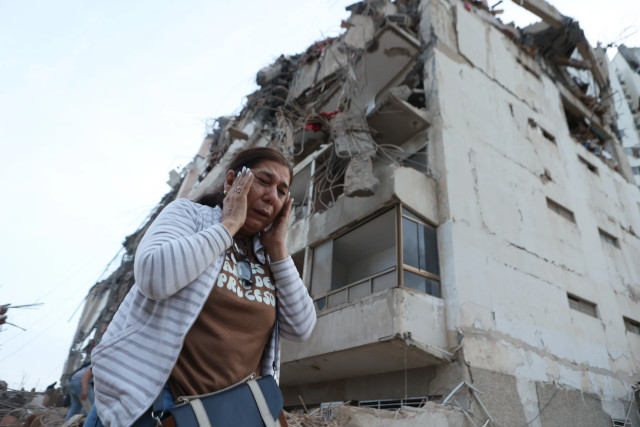
Caracas, the capital and largest city of Venezuela, experienced one of the worst earthquakes in history. The once-beautiful cityscape was not struck once, but twice by 7-magnitude tremors on Jun. 24, 2026. Due to the weak city’s structures, many of its skyscrapers, businesses, and homes were immediately reduced to rubble.
The ongoing coverage has reported that around 69,000 individuals are still missing, and the USGS estimates the total death count will reach between 10,000 and 100,000. Authorities have confirmed 1,430 people are dead, while 3,238 were found injured.
How Venezuela’s Unwise Planning Affected Caracas
When Wednesday reported twin quakes, measured at 7.2 and 7.5, the USGS suspected a high death count for Caracas and its coastal neighbor, La Guaira, due to the cities’ frail infrastructure. The South American nation had suffered from rushed and unfinished development since 1935. After the death of Dictator Juan Vincente Gómez, the Venezuelan government underwent decades of power struggles and irrational decision-making that led to rapid urbanization.
The 1950s oil boom led countryfolk to move to the cities, hoping for better job opportunities and cash in the liquid gold. Architects training under the French had to adapt and construct homes that utilize Caracas’ spacing. However, instead of following city designer Maurice Rovital’s diagonal alley approach to match the valley’s topography, Venezuela was inspired by the United States.
American companies were expanding internationally after World War II, shifting Caracas’ cityscape towards greater urbanization rather than preserving its agriculture. American planner Francis Violich drafted a loose construction plan that converted existing farmland into pocket compounds for homes. What was supposed to modernize the natives’ lifestyle blossomed into a sector of slums.
One of their most famous neighborhoods is 23 de Enero (the 23rd of January in English), named after the day Dictator Marcos Perez Jiménez was overthrown and the Coordinadora Simón Bolivar (CSB) revolutionary group formed. The telltale sign of the country’s unstable architecture was when the Torre de David (Tower of David in English) crumbled in half due to an earthquake in 2016. Squatters who made their dystopic utopia in the unfinished building were thankfully evacuated two years before the event.
Political Affairs Reflect Venezuela’s Unstable Economy
During the nation’s rapid urbanization, its economy has repeatedly endured hardships as more people pursued the oil boom. The United States led the majority of international migration of oil companies, while Europe followed second. According to Taylor and Francis Online, Nelson Rockefeller and his corporation, Standard Oil, controlled 50% of Venezuela’s oil production, within the Eastern Regions and Maracaibo Lake since the 1940s.
The entrepreneur also held responsibility for intermingling US politics into their government system. He convinced the Roosevelt administration that it was “not possible to divide political and economic affairs.” He gained a promotion to coordinate the Inter-American Affairs.
Rockefeller reinforced the Good Neighbors Policy in an attempt to strengthen Latin America’s cultural ties. Its 50-year ruling worsened the relations of Venezuela and its neighboring countries. It sparked stark pragmatism as the US valued its oil fields rather than offering resolutions for the people. Even if it meant supporting repressive regimes. His influence was so strong that the Rockefellers expanded into food production.
The Good Neighbors Policy is perceived negatively by many people, for their ancestors witnessed corruption with foreign corporations and the domestic elites. Their grievances empowered political movements during the Cold War.
In 1958, Venezuelans experienced further cruelty with the Puntofijo Pact after Jiménez’s downfall. Former President Rómulo Betancourt, an anti-communist democrat, supported the dual-democratic system to benefit the nation’s economy in defending against Cuba’s communist party. The agreement was masked by the Bentancourt Doctrine, where the country swore to refuse diplomatic relations with any government that rose to power through military means. Both still contributed to the country’s corrupt control of resources.
The next-in-line president, Hugo Chavez, has tried to recover Venezuela’s economic losses in the Bolivar Revolution. From 1999 up to his death in 2013, he highlighted the nation’s key industries that could fund the government and aid those in poverty. His policies gave the poor access to healthcare, food, housing, and education. Unfortunately, US sanctions, inflation, and soaring crime rates made it impossible to keep his charitable efforts afloat.
When Nicolás Maduro was voted to be his successor, millions of Venezuelans fled the country. They were exhausted by the once-prosperous nation that continued to show repeated corruption, domestically and internationally.
Maduro and his wife, Cilia Flores, are currently being tried in US courts, convicted under allegations of running a drug ring, kidnapping, and illegal weapon dealing. Without him, the nation lost control over oil reserves, mineral resources, and foreign policy.
Twin Quakes Unfortunate Timing for Venezuela’s Recovery

The Twin Quakes of Caracas came in as the nation was starting to climb out of an economic depression. Venezuela has been operating under Maduro’s vice president, Delcy Rodriguez, who previously vowed to the country to become market-friendly to US diplomats and delegators.
Since the incident, citizens have actively jeered her because the government isn’t responding fast enough to the disaster crisis. The Rio Times reported that the quakes alerted business investors to a financial risk for companies in Caracas that may struggle or will cease operations in the aftermath.
The Trump Administration is deploying the Disaster Assistance Response Team (DART) to aid Venezuela in its time of utter need. The official state address confirmed they are cooperating with partners for additional assistance, such as SOUTHCOM and Starlink. They will be sending $150 million as emergency assistance funding.
Citizens are taking action to work alongside authorities and rescue workers to search for the remaining missing individuals. If you would like to hear the live updates on donations and courageous acts, Florida radio station WMNF is covering the crisis for English listeners.
