
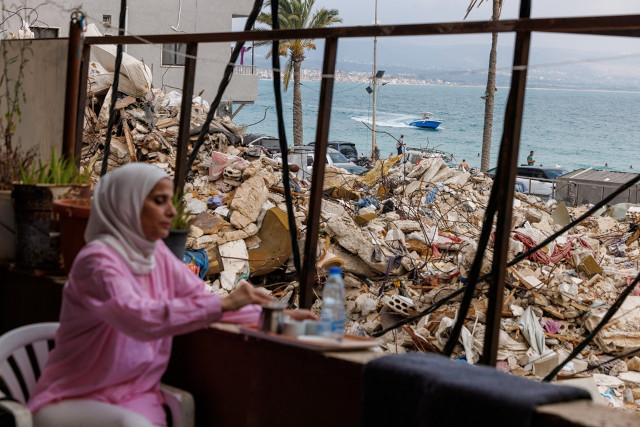
The United States of America is dragged back into the US-Iran War after another short-lived peace deal was broken. For nearly a year, this endless cycle of false promises has cost the livelihoods of the lower-class Americans and taken thousands of lives between Israel and Iran.
The latest incidents of the air strike barrages and the Democrats who voted to pull aid away from Israel show how much the nation is failing under the Trump administration. The war’s continuation has steadily increased the price of goods, spreading the fear of both immigrants and US citizens, and challenging the ethics of American democracy.
US-Iran Peace Deal Collapsed During World Cup 2026
The 2026 World Cup has intensified the relationships between soccer teams on the field and the disruptive political climate with the US against other nations. In June, the Trump administration and the Khamanei regime reached a compromise with their US-Iran Peace Deal.
Iran’s team, Team Melli, was held hostage by the US government’s immigration policies. The players’ visas only granted permission to travel in the United States for 10 days before their opening match against New Zealand. Then they were forced to reside in their Tijuana home base for the remainder of the championship season.
Despite the government issuing Team Melli to leave, President Donald Trump and his vice president, JD Vance, signed a treaty with the Iranian Parliament Speaker, Mohammad Bagher Ghalibaf, on Jun. 15. The agreement was negotiated over nuclear weaponry and restricting access to nuclear components such as uranium. The US-Iran Peace Deal lifted the US naval blockade from the Strait of Hormuz.
However, this did not stop the conflict between Israel and the Hezbollah-led Iranians. According to CNN’s timeline, they continue fighting in southern Lebanon. Iranian-American political analyst Negar Mortazavi told Al Jazeera, “I expect a US deal to open the door for better relations and hopefully a positive impact on the situation of [Team Melli] and remove some of the hurdles if the US can extend some goodwill gestures to them.”
As the world expected, the US-Iran War resumed. On Jul. 9, the Trump administration and the Khamenei regime broke the agreement by ordering air strikes on one another. Gulf News reported that the US and Iran are pushing to pin the blame on whoever made the first attack. Furthermore, the US targeted three Middle Eastern vessels with connections to Iran’s Islamic Revolutionary Guard Corps. Within two days of non-stop attacks, the Strait of Hormuz closed again to the United States.
US-Iran War Continuation Complicates Israel Aid
The US-Iran War has shown that its destruction is proving to be a strain on the US’s support for Israel. Since 2024, Iran has threatened to halt any incoming humanitarian aid across the Gulf. Yet the Middle Eastern nation found that harming the global economy is more effective since it is prized for its natural oil and transportation routes.
And this tactic is proven effective and makes a dangerous combo with Trump’s tariffs, which have increased import and export expenses. The on-and-off peace deals have also made it extremely unpredictable to maintain these operations as oil costs have exponentially risen for the US.
The US-Iran War has now driven America to a turning point where they finally chosen to wave a surrender flag in providing efforts for the Israeli people in Gaza. The House of Representatives witnessed a divided vote to end humanitarian aid. Telegram & Gazette reported that 103 Democrats have supported the amendment proposed by Kentucky Representative Thomas Massie to cut military assistance for Israel.
The cut would have stopped a $3.3 billion spending budget to continue supporting Israel. The final tally was 104-314, meaning it failed by a landslide.
What’s Currently Happening in the US-Iran War
As of Jul. 19th, the US-Iran War is still experiencing strike barrages as the seventh strike is underway. Iran rebels against their troops with a drone strike, killing a US service member in the process. Oil exports have once again slowed down as ship attacks are increasing across the Gulf. The escalation has not stopped trying to make amends with Israel and Hezbollah, as US State Secretary Marco Rubio negotiates with the Lebanese President, Joseph Aoun.

