
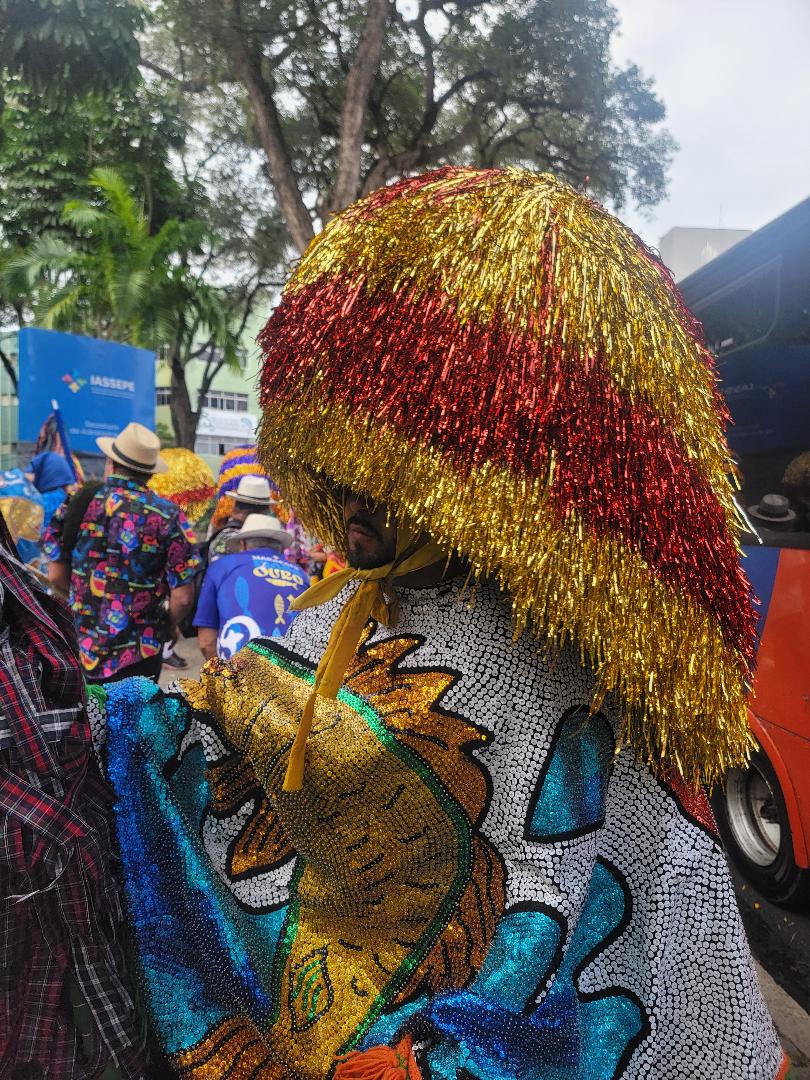
Maracatu is one of the most vibrant and significant cultural traditions of Pernambuco, Brazil. Known for its powerful drumming, colorful costumes, energetic dances, and deep historical roots, Maracatu represents the rich blend of African, Indigenous, and Portuguese influences that shaped Brazilian society. More than just a performance, it is a living expression of identity, resistance, spirituality, and community that continues to inspire people across generations.
The origins date back to the colonial period, when enslaved Africans brought to Brazil preserved many of their cultural and religious traditions despite harsh oppression.
The Two Types of Maracatu
There are two main forms of Maracatu in Pernambuco: Maracatu Nação (also called Maracatu de Baque Virado) and Maracatu Rural (also known as Maracatu de Baque Solto). Maracatu Nação is most closely associated with the city of Recife and has strong connections to Afro-Brazilian religions such as Candomblé and Jurema.
There are performances featuring large percussion ensembles, royal courts dressed in elaborate clothing, standard bearers, dancers, and the famous Calunga, a sacred doll that symbolizes the spiritual ancestors of the group.
Maracatu Rural developed in the sugarcane-producing areas of Pernambuco and has a distinct style. It is famous for the colorful costumes worn by the Caboclos de Lança, who decorate themselves with bright ribbons, sequins, mirrors, and impressive feathered hats. Their striking appearance and rhythmic movements create a spectacular visual display during parades and festivals.

Drumlines that Match the Beats of Hearts
Music is at the heart of every performance. The powerful rhythms are created by traditional percussion instruments, including the alfaia drum, gonguê bell, caixa drum, agbê shaker, and mineiro. Together, these instruments produce complex beats that encourage dancers and audiences to move in unison. The songs often tell stories of history, faith, daily life, and the struggles and achievements of Afro-Brazilian communities.
It matches the roar, energy, and the Bonecos Gigantes of Carnival! It plays a central role during Carnival in Pernambuco, especially in Recife and Olinda. Thousands of spectators gather to watch groups parade through historic streets, accompanied by thunderous drumming and lively dancing.
While Carnival is the most famous occasion for these performances, many groups remain active throughout the year by organizing rehearsals, educational workshops, religious ceremonies, and community projects that help preserve their traditions. Recife’s very own (and one of Brazil’s most well known artist) Chico Science, included elements of Maracatu in his hit, “Maracatu Atômico.”
Pernambuco: The State of Revolution
Pernambuco has played a major role in Brazil’s history through a series of important revolutionary movements that reflected the region’s desire for political freedom, economic justice, and self-government. One of the earliest and most significant events was the Pernambuco Revolution of 1817.
Local leaders declared an independent republic. Making Pernambuco its own country within Brazil. Although this lasted 75 days before being suppressed, it became a lasting symbol of resistance and the struggle for liberty. To this day, many Pernambucanos proudly say, “Pernambuco meu pais,” or Pernambuco my country.”
Beyond entertainment, Maracatu serves as an important educational and cultural institution. It teaches younger generations about African heritage, local history, music, dance, and respect for cultural diversity. Many schools and cultural organizations partner with groups to introduce students to this important aspect of Pernambuco’s identity. These activities strengthen community bonds and encourage pride in the region’s unique traditions. Inspiring the next generation of revolutionaries and proud countrymen.
Maracatu is much more than a colorful parade or musical performance. It is a powerful symbol of resilience, creativity, and cultural pride that reflects the history and spirit of Pernambuco. Through its unforgettable rhythms, elegant costumes, and meaningful traditions, Maracatu continues to celebrate the enduring legacy of the people who created and preserved this remarkable expression of Brazilian culture.
