
As an African-American woman from the southern part of the United States, February (Black History Month) and June (Juneteenth) are naturally my favorite months of the year. And I’m not the only one. But what many don’t know is that Black August needs to be added to that list.
Besides being the beginning of the end of Summer, August is also the month of revolution in African-American history. A pattern of resistance that is worthy of celebration and acknowledgement happened during this month. Starting from when enslaved Africans were brought to the United States.
In August 1619, enslaved Africans touched foot in the first permanent English settlement. August is a special month for Black American history. It ties together the resistance we see in past and present day America.
The Origins of Black August
Black August got its start at San Quentin State Prison in 1979. It was initiated by the Black Guerilla Family when a group of incarcerated people came together to commemorate the deaths of Jonathan P. Jackson (d. August 7, 1970) and George Jackson (d. August 21, 1971).
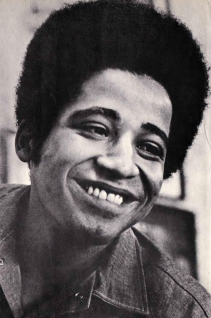
George Jackson was a 19-year-old convicted of armed robbery in 1961, and was sentenced to a prison term of “1-to-life,” meaning prison administrators had complete and arbitrary control over the length of his sentence. He never lived outside of a prison again.
He spent the next 11 years in prison (seven and a half years of those in solitary confinement). In those 11 years, while living in an environment of extreme racism, repression, and state control. Jackson’s political fire was ignited, and he used his own light to inspire other revolutionaries of his generation.
He led study sessions on radical philosophy and created groups like the Third World Coalition. He also started the San Quentin Prison chapter of the Black Panther Party, and published two widely popular books while incarcerated: Soledad Brother and Blood in My Eye.

His Death Sparked A Movement
George Jackson’s brother, Jonathan Jackson, realized his brother would likely never be released from prison. At 17 years old he staged an armed attack on the Marin County Courthouse to demand the Soledad Brothers’ immediate release.
Jonathan Jackson enlisted the help of three former prisoners: James McClain, William Christmas, and Ruchell Magee. Jonathan Jackson, McClain, and Christmas were all killed, while Magee was shot and re-arrested. Ruchell Magee, was one of the longest held political prisoners in the world when he was finally released in 2023, the same year he passed away.
On August 21, 1971, just over a year after the courthouse incident, a prison guard assassinated George Jackson. The facts regarding his death are disputed. Prison authorities alleged that Jackson smuggled a gun into the prison and was killed while attempting to escape. Literary icon, James Baldwin, wrote:
“No Black person will ever believe that George Jackson died the way they tell us he did”
The death of George Jackson inspired Bob Dylan’s, “George Jackson,” which was released in 1971. Though controversial, the song captures the mixture of grief, inspiration, and woe of the times after Jackson’s death.
Dates To Remember During Black August
The beauty (though born through pain) of Black August is that it’s not just a celebration of African-American liberation and resistance in the United States. It’s a a celebration meant for the diaspora. Celebrating includes remembering revolutions and those who inspired them.
Birthdays of famous Black figures in August (and there are a ton), Independence Days of Black of those of the Black diaspora across the globe, and the unjust deaths of Black lives. Here’s a list of days to learn about, remember, and be inspired by during Black August.
