
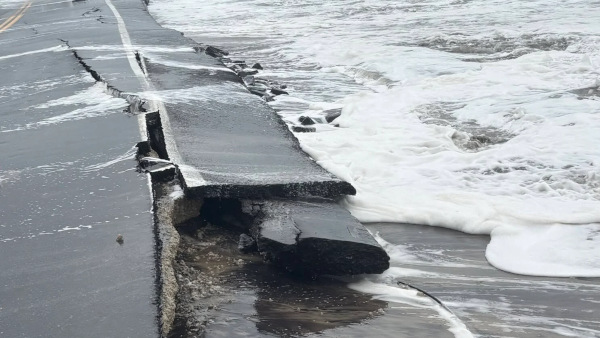
Between Sept. 24-27, the US Atlantic Coast went under hurricane watch. Nor’easters were later reported to have struck North Carolina’s Outer Banks. These cyclones came at an unfortunate time as the state islands were undergoing a road restoration project. Among the damage is the main highway route, NC-12, now severely tattered and closed down to prevent further accidents. Without it, Outer Banks residents lose access to mainland services.
Where in the Outer Banks is it Affected?
Local news stations reported to the NC mainland that the nor’easter thrashed through Hatteras Island and Pea Island. WTKR News 3 said that the high tide rose above 500 feet, crashing past the dunes and the roads near the beaches on Sept. 24. The nor’easter also caused nearby neighborhood flooding, and its winds have knocked out power.
While NC-12 is closed indefinitely on Pea Island’s side, the Marc Basnight Bridge to Rodanthe shuts down on Hatteras’s end. Both route closures have expanded into Ocracoke Island as residents rely on these roads to access necessary resources, including healthcare services, groceries, even electricity and fuel.
Dare County has declared a local emergency for the affected islanders and visitors, conducting a 24-hour ferry service for mainland transport since Sept. 27. The Island Press is issuing live updates on car traffic, watching the county test itself during the crisis. So far, the Outer Banks have experienced a couple of delays due to the ferry’s 30-vehicle limit. On the morning of Sept. 28, 400 vehicles were found in line to reach the mainland.
Repairs Are Expected to Be $1 Billion
According to WRAL News, the natural disaster is halting efforts to repair the Outer Banks roads that experienced major damage from past hurricanes and tropical storms. The island restoration project was funded for $42 million
The nor’easter’s overwash has mostly erased the islanders’ progress when the high tide crashed into the pavement. NC-12, which has undergone routine maintenance and federal disaster work between 2010 and 2024, is now in worse shape than ever before.
North Carolina Department of Transportation Ferry Division Officer Tim Hass told WRAL that the state is looking for possible long-term solutions for more durable roads during hurricane season. However, he remains skeptical because of the current state of the US economy, which is continuously changing in the political climate. “It takes political decision. It takes money,” he said.
UNC-Chapel Hill Environmental Science Professor Laura Moore said that repairing a 17-mile road like NC-12 between coastlines will be tougher than ever before due to government spending. “It’s extremely expensive and it takes a long time to gather funding and go through the processes necessary to build a bridge like that,” explained Moore.
The other factor is setting up a proper construction timeline against an ever-changing shoreline. She added, “The shoreline is just moving extremely rapidly. I think we’re facing a situation now where continuing to maintain the road in that location is just not viable.” Construction experts expect the cost will be about $1 billion, yet unsure when to begin.
Some Roads are Expected to Reopen
As the Outer Banks crisis continues, NCDOT is reopening a few roads in an attempt to reduce ferry delays and car traffic. Northbound roads in the Ocracoke-Hatteras and Roadanthe-Stump Point areas are available for transport. The Southbound routes will remain closed throughout the emergency.
Dare County officials have expressed their uncertainty about when Hatteras Island will be opened again to the public. Road crews are already hard at work on the shoreline paths, moving sand and damaged pavement. The nor’easter’s path continues to travel along the North Atlantic, with Canada expected as its final stop on Sept. 30.

