
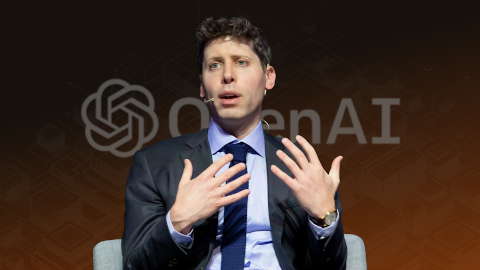
For four years, artificial intelligence has integrated into almost every industry, whether for the best intentions or worsen the pipeline. OpenAI CEO Sam Altman made the technology mainstream when he introduced the program, ChatGPT. Using generative pre-trained transformers, anyone can give it commands, and it will generate an answer based on popular articles and available information.
This attracted Big Tech and small developers to jump into the AI market. As these programs became more accessible, ChatGPT users witnessed Altman’s leadership crumbling. What used to be a worry for the US job market has officially become a global concern as it integrates deeper into political misuse, energy cost, and invasion of privacy. AI regulations are being pushed to have limitations, yet Big Tech, including OpenAI, is actively targeting journalists with subpoenas to silence their criticisms.
OpenAI Raise Suspicion on Profit Margin
OpenAI’s censorship sparked when Altman was questioned about the company’s profit reports. In 2025, BG2 host Brad Gerstner held a Halloween interview with him and Microsoft CEO Satya Nadella to discuss how artificial intelligence can reindustrialize the US. He pressed Altman on ChatGPT’s $13 billion in annual revenue and asked how he could spend $1.4 trillion on commitments.
He reluctantly interrupted with this response: “First of all, we’re doing well more revenue than that. Second of all, Brad, if you want to sell your shares, I’ll find you a buyer.” Nadella awkwardly laughed to ease the tension while Gerstner stared at the OpenAI CEO. Around the same time, Big Tech was projected to splurge $380 billion in AI adoption with Alphabet, Meta, Microsoft, and Amazon as the leading players.
Then, on Dec. 19, More Perfect Union published a video about Altman’s history and how it ties to him convincing the US to invest in OpenAI. He informed the public that data centers are essential for feeding their large language models (LLMs) with social media and, most importantly, for generating enough wealth that people no longer need to work.
Data analysts and journalists uncovered that Altman has repeatedly called for investors and scraped information for profit for the past 18 years. He played a major role in purchasing Reddit after its co-founder, Aaron Swartz, an internet activist. He intended the website to be solely a social news-sharing site that allowed people to access information publicly without subscriptions. He committed suicide in Jan. 2013, which led to Altman purchasing the site to train ChatGPT using the data received until 2022.
Who is Actually Profiting from AI?
Since many businesses joined the AI craze between 2024 and 2025, observers noticed how OpenAI’s splurging influenced Big Tech and PC parts manufacturers. Altman’s ChatGPT has shown signs of struggle since debuting the program. He announced that the generative assistant will soon be provided with advertisements in the Free version on Jan. 16, 2026. The Go version offers more generative features at the cost of $8 per month while still providing ads to make passive revenue.
Economists projected that Altman’s high spending is what is causing his business model to fail due to more free alternatives. He lost $5 billion in 2024 and is expected to lose an estimated total of $14 billion from 2025. Two successful examples are Mark Zuckerberg and Satya Nadella. Zuckerberg offers Meta as an AI marketing tool for Facebook and Instagram business accounts, and Nadella provides Copilot and Azure in Windows 11 PCs and Microsoft Office programs.
The true winners of the AI industry are the RAM manufacturers. South Korean memory provider, Samsung, reported to have earned 333.6 trillion won ($232.205 trillion USD) in revenue. SK Hynix follows a close second with 97.1467 trillion won ($67.724 trillion USD). This is because OpenAI demanded more computing capacity to aid AI data centers in improving productivity. Unfortunately for the United States, there appears to be no success in their bets.
OpenAI & Big Tech Wants to Bury the Truth
Altman and his OpenAI partners are walking on a path that no longer aims to help people, but rather boost the US economy. 2025 showed that Big Tech has placed itself in a bidding war to be the best artificial intelligence provider in the world.
Bloomberg reported that Zuckerberg is expanding the original Meta budget of $72 billion to $135 billion for technological research on native AI. Microsoft, Nvidia, and Amazon are expected to invest an additional $60 billion in OpenAI’s endeavors. Yet, concerns are demanding for guardrails and regulations that don’t serve their personal interests.
Creatives have spoken against generative AI because it scans and plagiarizes their published works. These leaders marketed the technology can be trusted for efficient workflows, but it has gradually backfired as programmers dissected agentic AI to collect personal data from their computers and mobile devices.
They also refused to take responsibility for children using AI to access methods of self-harm. The same can be said for the rise in energy cost as multiple reports demands data centers be near a water supply. And finally, the Trump administration has repeatedly abused generated deepfakes to tell fake narratives of actual world events.
Big Tech and OpenAI are actively sending subpoenas to suppress journalists and other anti-AI operatives from discovering more information. Online news organizations are continuing to voice the ongoing censorship on US media. The Midas Project founder, Tyler Johnston, runs the AI watchdog to raise awareness on the technology’s misuse.
He became one of OpenAI’s targets and attempted to shut down his news site in August 2025. He’s still operating thanks to his legal team, who identified the once-nonprofit organization’s funding to private investors. To learn more about him and others on Altman’s list, More Perfect Union released a video on the matter.
