
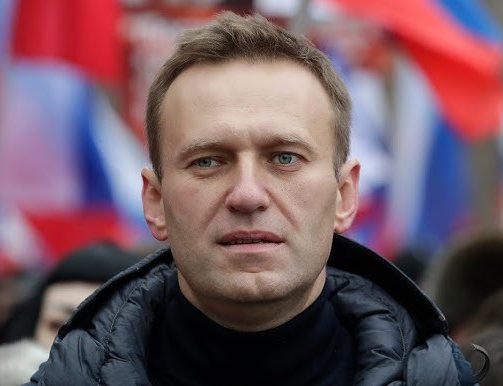
Five European governments are convinced that Russian opposition leader Alexei Navalny was poisoned with a lethal toxin found in South American dart frogs two years ago in a remote Siberian prison.
Dart Frog Toxin
Britain, France, Germany, Sweden, and the Netherlands released a joint statement on Saturday that they are “confident” Navanly was poisoned. After samples were taken from his body and analyzed, it “conclusively confirmed the presence of epibatidine.”
The Russian government is more than likely guilty of poisoning the opposition leader. The contributing countries allege that Russia violated the Chemical Weapons Convention and said they reported the case to the Organization for the Prohibition of Chemical Weapons.
“Russia claimed that Navalny died of natural causes. But given the toxicity of epibatidine and reported symptoms, poisoning was highly likely the cause of his death. Navalny died while held in prison, meaning Russia had the means, motive, and opportunity to administer this poison to him,” the statement read.
“Epibatidine can be found naturally in dart frogs in the wild in South America. Dart frogs in captivity do not produce this toxin, and it is not found naturally in Russia. There is no innocent explanation for its presence in Navalny’s body.” It remains unclear how the toxins were administered into Navalny’s body, according to European Officials.
Death of Alexei Navalny
On February 16, 2024, the Russian government announced Navalny’s untimely passing, and coincidentally, the Munich Security Conference opened at the same time. Navalny’s widow, Yulia Navalnaya, gave a speech insisting that Putin “would pay for what they have done to our country, to my family, and to my husband.” After a weeklong custody dispute, Russia agreed to release Navalny’s body to his mother.
Six months after Navalny’s death, Russia’s Investigative Committee refused to open a criminal investigation, claiming he had several medical conditions, such as hypertension, chronic hepatitis, and a damaged vertebra, which led to his death. However, one of Navalny’s former doctors said the diagnosis was “implausible.”
In September 2025, Navalnaya had a team transfer biological samples from her husband’s body abroad, in which two laboratories reaffirmed her suspicions that her husband had been poisoned. There was a photograph of her husband’s prison cell from the day he died, showing vomit on the floor, and official incident reports confirmed that he suffered heavy vomiting and convulsions just before he died.
Russian authorities initially claimed 47-year-old Navalny died of natural causes while serving a 30-year sentence for multiple crimes in a high-security prison above the Arctic Circle. Navalny was known for campaigning for anti-corruption and staging anti-Kremlin protests, making himself a prominent opponent of President Vladimir Putin.
Many Knew The Truth
Navalnaya attended a Munich Security press conference with European foreign ministers to announce the findings of her late husband’s death. She asserted she always knew something unnatural occurred, and now there was proof to support her claims.
“Scientists from five European countries have established: my husband, Alexei Navalny, was poisoned with epibatidine—a neurotoxin, one of the deadliest poisons on earth. In nature, this poison can be found on the skin of the Ecuadorian dart frog. It causes paralysis, respiratory arrest, and a painful death,” she said.
“I was certain from the first day that my husband had been poisoned, but now there is proof: Putin killed Alexei with chemical weapon. I am grateful to the European states for the meticulous work they carried out over two years and for uncovering the truth. Vladimir Putin is a murderer. He must be held accountable for all his crimes.”
The poisoning of Navalny shows that “Vladimir Putin is prepared to use chemical weapons against his own people to remain in power. France pays tribute to this opposition figure, killed for his fight in favor of a free and democratic Russia,” said French Foreign Minister Jean-Noël Barrot.
British Foreign Secretary Yvette Cooper supported the other countries’ claims, stating, “Only the Russian government had the means, the motive, and the opportunity to use that toxin against Alexei Navalny in prison. We are here today to shine a spotlight on the Kremlin’s barbaric attempt to silence Alexei Navalny’s voice.”
