
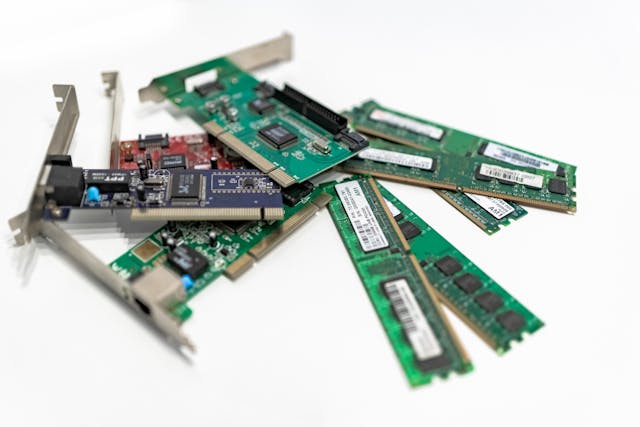
The RAM Crisis continues to throw blows at the video game industry. AAA studios shows signs of admitting that the memory shortage has caused trouble for developers and their accessible hardware. Sony is considering delaying the PlayStation 6 to 2029, Valve is delaying the launch of the Steam Machine, and speculation surrounds Nintendo possibly raising prices on the Nintendo Switch 2 as more memory components are being sold to AI data centers.
At first glance, it appears the gaming market could see a crash in sales if they try to produce for consoles and computers that run on DDR5 memory. However, game studios can still manage to create by observing and understanding what their consumers have in their households. Here are three things they should consider for current and new projects.
Experiment with Optimization
2025 became the year when AAA developers chose not to worry about game optimization. This belief spread due to Nvidia’s DLSS placing a standard for their adapted AI generating fake frames for smoother game performance. Capcom’s Monster Hunter Wilds has proven how crucial these settings can affect a player’s experience, from great to abandonment.
The PC version of the game was plagued with criticisms for its lack of hardware awareness. Before the RAM Crisis escalated in December, Capcom expected to see players rely more on frame generation rather than visual quality. Despite having a Benchmark Demo, the Monster Hunter: World team did not pursue proper optimization on the RE Engine.
The developers did not consider how graphics card and processor combos would affect game performance. It led to negative criticism that shunned the game and to unforgettable screenshots of 3D models struggling to load. They have attempted to make amends in their Title Update 4.

Another reason behind bad game optimization is the amount of RAM. The latest standard minimum for modern games is 16 GB instead of 12. It’s easier for PC users to upgrade with a GPU or an additional RAM stick, but not for laptop users, who have limited options. CPU and GPU processors are integrated into the motherboards. Most will have one or two SODIMM RAM slots for upgrading memory. Older models are likely to upgrade only up to 12 GB, which makes it harder to run modern games properly.
Finally, there are screen resolution adjustments. Apparently, there are still gamers who continue to play on HD to 4K monitors, as 8K models are mostly priced over $400. It can also cause game performance to be difficult if they don’t match because they may not be able to handle the graphics.
This causes the video quality to appear gritty. Modern games offer more settings for players to mix and match to improve gameplay, such as low-quality textures and no shaders. They aren’t always reliable and can cause frame stuttering.
Focus More on Gameplay than Graphics
The RAM Crisis brought a new problem for game developers who aimed to deliver more realistic visuals while trying to provide entertaining gameplay, sometimes at a cost. Take the failure of Five Nights at Freddy’s: Security Breach. Steel Wool Studios were overambitious in creating the world of the Pizzaplex, but forgot to make gameplay suitable for the franchise. This resulted in leaving character models and environment assets with a high polygon count that caused slow frame rate and long loading times.
Steel Wool learned from its mistakes and improved it in the DLC Security Breach: Ruin and the prequel Secret of the Mimic. The same cannot be said for Build a Robot Boy’s MindsEye. What was meant to be the GTA killer ended up being one of the most disastrous game launches in 2025. The studio focused more on how the game looks rather than on playtesting. Their ambitions led to Unreal Engine bugs that distorted models, clunky physics, and program crashes.

AAA studios and indie developers should take a step back to make their graphics less labor-intensive now that the RAM Crisis has led to more demand for DDR5 memory. Instead, they should aim for DDR4 and DDR3. Thanks to Micron, their Crucial products are no longer a consumer-budget memory option.
While Samsung has confirmed it will contribute to AI data centers, it will continue producing DDR4 memory for PC builders and the previous game console generation. As for DDR3, it’s slightly rare but is the more budget-friendly option people still keep around to run older PC games that support DirectX 9 and DirectX 10.
Get Creative with What You Got
Something that a majority of gamers agree on is that generative AI has caused developers to lose their sense of creativity. With the RAM Crisis, AI software is encouraged to be used during the idea or programming process. But many studios, both indie and AAA, have experienced backlash for using the technology.
Due to the state of the memory shortage, game companies who intended to use AI may want to double-check their employees’ equipment. AI mainly affects RAM and graphics cards that contain DDR5 and HBM (High Bandwidth Memory). DDR4 can handle the technology, but it’s not recommended for PC motherboards that can’t reach the 128 GB minimum.
The RAM Crisis could help developers exercise their natural creativity for their next game project while restricted to the current equipment they have. Companies like Framework recognized this issue among remote employees and college students working exclusively on laptops. By providing an upgradable laptop, their customers have become loyal since they no longer need to purchase a new model for one specific PC part.
Framework founder Nirav Patel also expressed that the company caters to people who need an affordable PC rather than businesses that demand them. “We’rein this very interesting middle ground where we can do things that the bigger players can’t,” he told Rock Paper Shotgun.
“We have access the smaller players don’t have, and so we get to be creative in how we source it. Our supply team is incredibly capable, and has ears on the ground everywhere to make sure that we’re able to continue getting out the supplies we need to keep our products available.”
And the situation is a good thing for the people who have been rejecting AI slop. The RAM Crisis could help lower the production of generative content, including artwork, writing, programming, and music. It won’t be easy to wipe away studios like Electronic Arts and Level-5, who already have access to the technology ahead of time. Time to start practicing those skills and brainstorming ideas from scratch.
