
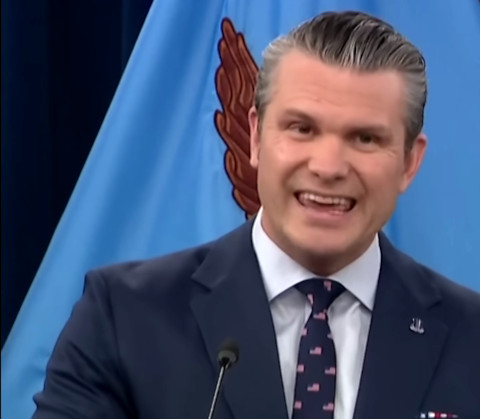
A group of United Nations and International law experts requested that the Guatemalan-based Inter-American Commission on Human Rights (IACHR) review the boat strikes of US War Secretary Pete Hegseth. His drug boat eradication around the Caribbean has risen to an alarming rate, with the death count reaching over 160 people.
The American Civil Liberties Union (ACLU) will be representing families who identified two victims from Tobago and Trinidad. IACHR’s US human rights attorney, Dan Kovalik, previously filed a complaint on behalf of the late Colombian national Alejandro Carranza Medina back in September 2025. These cases will challenge the legality of the Boat Strike Policy on Hegseth’s orders.
Pete Hegseth’s Boat Strikes Review
The US War Secretary sent out naval fleets around the Caribbean and above South America to patrol the waters for possible Venezuelan drug cartels. On Sept. 2, 2025, he ordered a missile strike without hesitation. The boat was confirmed by the Special Operations Command to be carrying 11 passengers. Hegseth attempted to persuade the American public that he is identified as a co-conspirator with Venezuela.
These attacks continued into October, causing the death toll to grow to 61. Despite having the necessary resources to assist Haiti and the Caribbean nations to evacuate from Hurricane Melissa, Hegseth did not see the need to help.
He allowed the US Navy at their designated bases, including Guantanamo Bay, to flee from the disaster zone by Oct. 28. Those on boat duty were to remain at their posts in case of more suspicious boats crossing the sea. Satellite images were later shared, revealing that ships were identified as ‘unclassified’ vessels.
Until Nov. 28, the Washington Post received intel about Hegseth’s second strike on the first boat. In charge of the report was Admiral Mitch Bradley, who confirmed that 2 of the 11 passengers survived, but denied that his commanding officer gave the “kill them all” order.
Legal experts see it as a violation of the Geneva Conventions’ second treaty. Article 16 states that shipwreck survivors are identified as ‘wounded’ and have the right to be protected and facilitated.
Why is the IACHR Getting Involved?

Guatemala is the base of operations for the IACHR, and its officials are responsible for reviewing public policies in the Caribbean and Latin America. Due to the duration of Hegseth’s attacks on boats without process, his actions are to be reviewed under the Constitutional Court.
According to the ACLU, the organization and its partners will be presenting how the US government’s lethal-strike policy violates international law and how President Donald Trump is abusing his executive power. Most importantly, the representatives want Hegseth and the US Defense Department to be held accountable for murder.
Staff Attorney Jeffrey Stein further explained, “[The President] believes that the strikes are legal because [the United States] is engaged in a ‘non-international armed conflict’ with a host of unspecified drug boat cartels. This is a legal impossibility.
Drug trafficking is not armed violence within the means of the law of armed conflict. […] They don’t have a command structure, they aren’t akin to regular armed forces, it’s a crime. It’s governed by criminal law, subjected by constitutional protection like due process.”
By now, the United States and the world have witnessed the lack of transparency from the Trump administration. That includes Hegseth’s aggressive behavior any time he is questioned about the Caribbean boat strikes and Operation Epic Fury in Iran. He often boasts about the US military’s “Warrior Stature” to feel superior.
The 195th Period of Sessions Addressed the US Agenda

The IACHR concluded its review of the 29 public hearings held from Mar. 8 to Mar. 13. In the third quarter of the 195th Session, Commission President and Constitutional Lawyer Edgar Stuardo Ralon listened to representatives who opposed the US government’s agenda. The official briefing stated that they addressed the nation’s extraterritorial security operations.
Here’s what the members have to say during the Mar. 13 livestream: “This critical hearing has high stakes for not only the United States, but also for the entire [North American] region. This hearing is also occurring when the United States is engaging an illegal war in the Middle East, and while [President Trump] is violating the US Constitution and defying international laws.
[…] No country, no matter how powerful, has the right to engage in illegal manipulative strikes to cause death, violence, and harm to people in communities. As of Mar. 12, 2026, the United States has launched 45 armed attacks against boats, mostly in international waters, killing [over 160 people] with only three known survivors and nine others missing.
[…] We must remember that all of these individuals have names, families, and lives that will never be the same. The United States has not conducted these strikes in pursuit of any congressional authorization required under domestic law, and [we] circulated a letter that was sent from members of Congress. Representatives [Joaquin Castro and Sara Jacobs explained why it was not needed].
Instead, [the US government] has access unilaterally, and in violation of international law on the use of force, and federal officials, including the president and [War Secretary Pete Hegseth], have publicized videos of the boat strikes. They are boasting and celebrating their own roles in killing defenseless people.
As you will hear from our delegation, these are premeditated and intentional extrajudicial killings that lack any possible legal justification. Thus, they were simply murders ordered by the highest levels of government and info bays by manipulative officers in the chain of command.”
The opposing representatives further established their argument by presenting recorded videos and Zoom calls from supporting members of other human rights organizations. They all agree that Pete Hegseth’s boat strikes are inexcusable, for they try to obscure justice by continuously attacking civilians with no evidence of the victims being drug cartel operators. They hope to see an end to such illegal actions by the US in the Caribbean and Latin America.
