
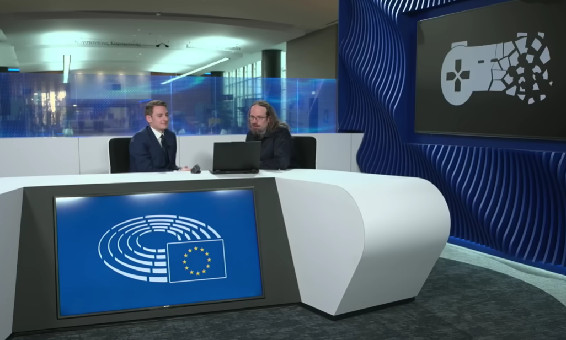
The game preservationist group, Stop Killing Games, has recently made progress in informing the European Parliament about consumer malpractices from Video Games Europe (VGE).
On Apr. 13, they allied with California State Assembly member Chris Ward to support the latest bill, the “Protect Our Games” Act. Then, on Apr. 16, SKG leader Ross Scott attended the Parliament hearing and discussed how the VGE is undermining the European Consumer Centers Network (ECC).
These events have highlighted certain video game companies’ shady business practices. Scott explained that while the developers have the right to end a game’s online service, they do not have the right to delete owned copies, both physical and digital. The Stop Killing Games hearing now extends to global heights in the debate of abusing digital surveillance for cultural erasure.
What is Chris Ward’s “Protect Our Games” Act?
Back in February, Ward needed assistance with drafting the California bill, AB 1921. AB 1921, also known as the “Protect Our Games” Act, requires any video game company providing online purchases or services to inform consumers of a server shutdown. The bill went through multiple revisions, defining the violations and consumer protection.
The Assemblymember added that if a video game provider prepares for end-of-support, they must abide by the following rules:
- Publishers must provide transparency 60 days ahead of the server shutdown.
- Publishers will not be allowed to sell their services two months before their scheduled final day.
- Developers must provide an alternative plan for consumers who own their product to enable offline play.
- Provide a full refund for any purchases made after the end-of-support announcement, including the game’s price if it was not offered for free.
Simultaneously, Stop Killing Games discussed the same industry issues with the European Commission. The organization held a press conference afterward, discussing the Digital Fairness Act and its relations with the ongoing fight against digital surveillance manipulation.
SKG has confirmed that they have been cooperating with Ward’s bill, as his intentions match their mission statement on game preservation. On Apr, 13, co-organizer Moritz Katzner addressed their supporters on LinkedIn, “Interestingly, the largest US lobby group has already come out against it, which likely means we’re on the right track.”
Katzner also informed that he has passed the matter to the Vice President of Dawn Campaigns, Jonah Goldman. He will be working alongside Scott and Ward as a SKG-US representative.
Stop Killing Games Addresses the Inconsistencies in VGE Practices
On Apr. 16, Scott presented a presentation to the European Parliament to offer evidence and explanations on the process of the VGE. Europe Echo has provided an edited upload of his statements on YouTube.
He first discussed how a video game company takes advantage of consumers’ trust by removing their product from their library and providing no disclosure on the shutdown. Then, Scott informed the MEPs that gamers were told by the EU Commission to address these issues to the ECC. Their method was shown to be ineffective, with the ECC responding that there is no clear regulation on the problem.
The Stop Killing Games leader even shared official questions from two Parliament members, wondering which statute of limitations the ECC can apply against the argument. They highlighted the major issues on the matter on Apr. 25, 2024: copyright infringement, a game’s expiration date, and, most importantly, whether publishers are allowed to destroy both physical and digital copies of a product after the online service is terminated.
Lawyer and Vice President of the European Commission, Vera Jourova, replied on Jun. 12, 2024, “Directive 2019/770/EU provides the consumer with remedies in the lack of conformity with the contract.
Specifically, in [a termination event] of the video game over a period of time, the provider must reimburse [the consumer’s purchases] for the remaining period of the contract if it had not been terminated. […] However, Directive 93/13/EEC prohibits unfair terms causing a significant imbalance in the parties’ rights and obligations to the detriment of consumers.“
Scott even reminded the MEPS of the catalyst behind the issue, Ubisoft’s The Crew. Since the publishers delisted the game in March 2024, their consumers experienced that their purchased copy was removed without warning. Ubisoft responded to the Stop Killing Games petition with their July 2025 EULA update, further escalating the situation.
It’s An Insult to Gamer Culture
Gamers who supported Stop Killing Games are onboard to push their support until the parties against their initiative can no longer suppress them. And Scott’s mission is more important than ever before. Thanks to their endeavors, the organization members have discovered that over 90% of gamers experienced their games being discontinued by their publishers for both full games and multiplayer modes.
Firewalk Studio’s failed hero shooter, Concord, made it into the conversation as being a prime example of a publisher not cooperating with the developers. Scott referred that the project had ‘no plans to end support’ despite its decline. Sony instead stopped its servers after two weeks of its release.
Katzner expressed that the VGE needs more transparency when they are terminating their services on a game. Instead, the ECC and the VGE are committing malpractices that will only benefit their businesses.
Since the Apr. 16 hearing, Stop Killing Games has received more attention than ever before, and critics are positively talking about their efforts as they reached international attention. If you like to see the full discussion, Europe Echo has uploaded the 43-minute version.
As for the European Union, they will be releasing an official response next month, on June 16. Euractiv reported that the MEPs signaled a split to support or reject about improving the Digital Fairness Act.
