
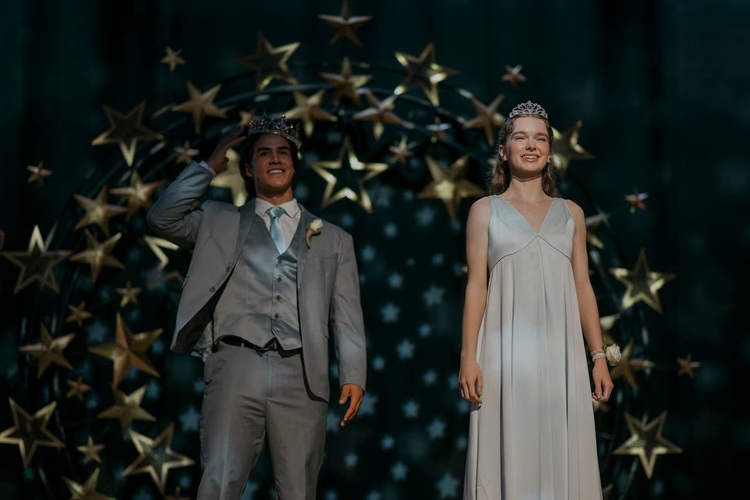
Carrie, the 2026 show on Amazon Prime, finds itself at the center of so many Venn diagram circles. It’s another Mike Flanagan horror television show. It’s one of dozens of Stephen King stories put to the screen in some fashion. It’s the fourth adaptation of the namesake book since it came out in the 1970s.
It’s also another example of Flanagan, one of the best working auteurs in film, taking a King story and improving it.
Carrie Has Mike Flanagan Updating, Smoothing Out Stephen King’s Timeless Novel

Carrie is one of the most iconic horror novels written. It was one of Stephen King’s first stories, first published in 1974 but written after The Long Walk, which would be published in 1979. Either way, it is ostensibly what put King on the map and established him as a master of the genre. It’s timeless, and it’s totally unsurprising that we now have four different adaptations.
Mike Flanagan’s is perhaps the most unique. It takes a 1970s classic and updates it for 2026. High school, and more importantly, high schoolers have changed dramatically since King first penned the story of Carrie White. Flanagan is the perfect person to come in and update it, but he made the smart choice of only hiring female directors to helm the episodes he didn’t do himself.
King’s original novel is a classic for a reason, but there are some troubling narrative elements. By the end of the story, which is pretty short for his standards, readers are left feeling like White is extremely justified in destroying the town, murdering a high school, and killing her mother. There’s just one problem: it reads a whole lot like a school shooter origin story.
An outcast is bullied relentlessly until they take matters into their own hands and exact revenge. It’s eerily prescient, since in 1974, there were hardly any school shootings. In 2026, there have been two dozen incidents, and the year isn’t even over. But it isn’t prescient in any sort of warning way. Instead, it is humanizing the perpetrator of these crimes.
Now, everyone is human, and shining a light on the conditions that can lead to violent outbursts like that is not bad at all. But the end result is that the shooter, or White, is seen as justified, and there just isn’t a justification for taking lives like that.
Fittingly, Flanagan places his story against the backdrop of school violence. On White’s first day in school (first day ever in a school of any kind or really out in public), there is an active shooter drill, only she doesn’t understand what’s happening or why this sort of thing is so commonplace to the other kids who’ve been in public school for a long time.
What helps make Flanagan’s version better is that he characterizes White much better. We get time to see who she is, who she wants to be, her likes and interests. In the novel, she’s pretty much off from page one and doesn’t ever get shown in any other light. The only real moments when White gets to be an actual human are in the lead-up to prom, when she’s making her dress and meeting with Tommy Ross.
Now, it bears mentioning that King’s version of White never had a chance. Her overly religious mother molded her that way, and the fact that she’d never really gone out in public didn’t help. It’s totally understandable that White wasn’t remotely normal from beginning to end. It wasn’t her fault at all.
But in Flanagan’s version, White tries to fight the programming from her mother from the first episode. She wants to have friends, she likes the computer, she loves to read interesting books, and she tries to befriend those who bullied her, Christine Hargensen being a prime example. The mid-season betrayal hits so much harder because White really tried to be Hargensen’s friend.
In King’s novel, almost every character is black and white. There’s little nuance. Margaret White is cartoonishly evil. So is Chris Hargensen. Billy Nolan is almost the devil himself. Only Miss Desjardin, Sue Snell, and Tommy Ross have any nuance applied to them, but it’s sparing. Snell seems to be more interested in being kind in order to make it up to White for participating in the initial bullying incident.
Flanagan adds nuance to everyone, because in real life, there’s plenty of it. Margaret White is shown to be the same overly religious nut who actively harms her daughter by refusing to educate her and refusing to set her up to handle the real world. But she’s also shown as someone who does love her daughter and does bring up very valid criticisms of the school system.
I most appreciate leaning into Snell’s willingness to help White. But instead of purely being out of guilt, we’re shown time and again that Snell is just trying to be a good person. She begs Hargensen to stop bullying White and breaks with her childhood friend when it’s revealed how deep the bullying actually goes.
And to add to the nuance, Flanagan even posits that there was a little bit of good from the Carrie Red Instagram account that brought on so much havoc. It inadvertently caught a pedophile. So even the most evil part of the show wasn’t entirely black and white. Because life and people are not black and white.
Not Perfect
This is not a perfect adaptation, though. It’s clear that Mike Flanagan wanted to try, understandably, to shift away from the school shooter allegory, and for good reason. But in doing so, he ironically took some agency away from Carrie White, just like the characters in the show. There is a twist involving one of White’s friends not being real, but seemingly being a fiction of her imagination.
Positioning this as the dark half of Carrie, with the two sides warring for dominance and how White should move forward, is brilliant. Emmaline being a piece of White that wants her to lean into her power and the rage is fantastic right up until the final rug pull that reveals that Emmaline is a real person, but she was astral projecting into White’s mind.
Because she’s real, she takes over for White and does most of the killing in the prom night massacre. Had that really been White’s subconscious, it would’ve been the perfect way to keep Carrie a sympathetic victim who simply lost control of her immense power after another incident of incredible cruelty. Having someone else do the killing removes some of the sting.
It does take the story a little bit further away from the school shooter allegory, which I believe is a good thing. But it inadvertently takes away White’s agency, and after not having it for most of her life, it’s disappointing that it happened again. Had it been Carrie herself, but the darker half of her that she’d been fighting with for most of the show, that would’ve been perfect. I wonder how much Amazon pushed for the Emmaline character so they could connect to or spin off into other projects.
Flanagan seems to be the one person capable of bringing good adaptations of Stephen King projects. In many cases, he even improves on them. He took The Life of Chuck, a meandering but structurally interesting look inside the mundane in all of our heads, and made it one of the most profound and moving movies I’ve ever seen. And while his version of Carrie isn’t perfect, it cleans up some of the biggest issues with the novel and meets the modern moment with aplomb.
Score: 4.25/5
