
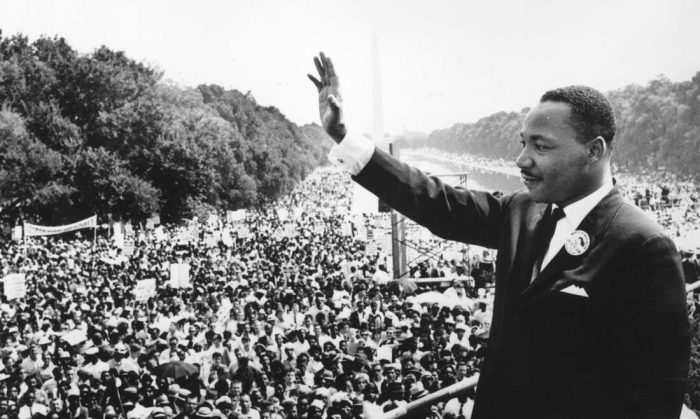
Today is Martin Luther King Jr. Day, a day that no matter what happens in history, or who says it is or isn’t a holiday, will always be carved in stone and celebrated over the ages. Martin Luther King Jr.’s life stands as one of the most historically documented and morally resonant journeys in American history.
From a childhood shaped by faith and racial contradiction to a public death that galvanized a nation, King’s story is not merely one of leadership but of pure equality. We continue to develop in 2026 from his shared intellectual and social-justice influence, evolving sense of responsibility today, and our ongoing efforts to make history.
Martin Luther King Jr.’s Roots
King was born on January 15, 1929, as Michael King Jr. His original name was after his father, but both later adopted the name Martin Luther King after King Sr.’s trip to Germany. They both found a strong admiration for the Protestant reformer Martin Luther. Born in Atlanta, Georgia, he was brought home to a neighborhood often referred to as “Sweet Auburn,” a center of Black business, culture, and church life.

King’s parents greatly contributed to his values. His father, Martin Luther King Sr., was a longtime pastor at Ebenezer Baptist Church in Atlanta. King Sr. was also a prominent figure in the city’s Black church and civil rights circles. His mother, Alberta Williams King, had been a schoolteacher. She was also the church organist, known for her discipline, intelligence, and deep religious faith. Together, they provided King Jr. with early exposure to religion, love, and the values of equality.
Martin Luther King Jr. grew up with both an older sister, Christine King Farris, and a younger brother, Alfred Daniel King. His sister grew into being an educator and scholar, while his brother entered ministry. He also, entered into civil rights activism. King Jr. became aware of racial injustice when he was a child, his earliest memory of this was when a white childhood friend was no longer allowed to play with him due to segregation. Early childhood experiences were just the start of lasting imprints of injustice.
Education And Career
Looking back, King Jr.’s academic strengths were evident early. When he was in high school, he skipped both the ninth and twelfth grades. At just 15 years old, he entered Morehouse College in 1944. Morehouse College is a historically Black institution, and at that time, it shaped his outlook and future. Being a gifted student, Morehouse offered him early admission.

Photo Credit: Morehouse College
At Morehouse, King Jr. studied sociology and came under the mentorship of Dr. Benjamin E. Mays, the college’s president from 1940 to 1967. Mays was also a theologian who emphasized the social responsibility of Christianity. King graduated in 1948 with a Bachelor of Arts degree in Sociology. From here, King Jr. increasingly felt that the ministry could be a vehicle for social change.
While many during that time were learning trade work, King continued his education at Crozer Theological Seminary in Chester, Pennsylvania. There, he earned a Bachelor of Divinity degree in 1951 and was elected the president of his class. While at Crozer, King encountered the writings of Mahatma Gandhi and began to seriously engage with the philosophy of nonviolent resistance.

Photo Credit: Willingboro Village
King Jr. then pursued doctoral studies at Boston University, obtaining a Ph.D. in Systematic Theology in 1955. During his time working towards obtaining his Ph.D., he was initiated into Alpha Phi Alpha Fraternity in 1952. While in Boston, he met Coretta Scott, a music student and fellow activist, whom he married in 1953 before graduating with his doctorate.
Martin Luther King Jr. – Career and Leadership
While King Jr. had already become a pastor at his family church in 1948, he would see a full-time pastorate in 1954. King accepted his first pastoral position at Dexter Avenue Baptist Church in Montgomery, Alabama. His role as a minister soon led to public leadership and the spotlight. In 1955, he emerged as a central figure in the Montgomery Bus Boycott, sparked by Rosa Parks’ arrest. King’s articulate advocacy of nonviolence and moral protest brought him national attention.

Photo Credit: BuzzFeed
As his influence grew, King was elected president of the Southern Christian Leadership Conference (SCLC) in 1957. The SCLC dedicated itself entirely to coordinating nonviolent civil rights protests across the South. By 1960, he had returned to Atlanta to serve as co-pastor of Ebenezer Baptist Church alongside his father, while continuing his national work.
“I Have a Dream”
The early 1960s marked the height of Martin Luther King Jr.’s public influence and involvement. He helped lead the Birmingham Campaign and delivered his iconic “I Have a Dream” speech during the 1963 March on Washington. This was a pivotal moment for civil rights and equality. The march played a key role in the passage of the Civil Rights Act of 1964 and the Voting Rights Act of 1965. That same year, Martin Luther King Jr. became the youngest recipient of the Nobel Peace Prize.
In his final years, King Jr. expanded his focus to include economic justice and opposition to the Vietnam War, positions that proved controversial even among allies. In 1968, while supporting sanitation workers on strike in Memphis, Tennessee, King was assassinated. Martin Luther King Jr.’s life came to an abrupt end on April 4 at the Lorraine Motel. He was 39 years old.
An Everlasting Impact
Today is a day we should all remember and take time to research. In 2026, we are still fighting many different types of social injustice and hate. Before history is altered or erased, take a moment to listen to Martin Luther King Jr.’s iconic “I Have a Dream” speech. The open rise of hate from various politicians and administrations today is disgustingly apparent. What would Martin Luther King Jr. say if he were here today?
His impact lies not only in the legislation his movement helped secure, but in the moral framework he offered the nation. He fused Christian theology, democratic ideals, and nonviolence into his vision for the nation. This vision continues today, from racial equity and labor rights to global human rights campaigns.
